
Back at 68° N
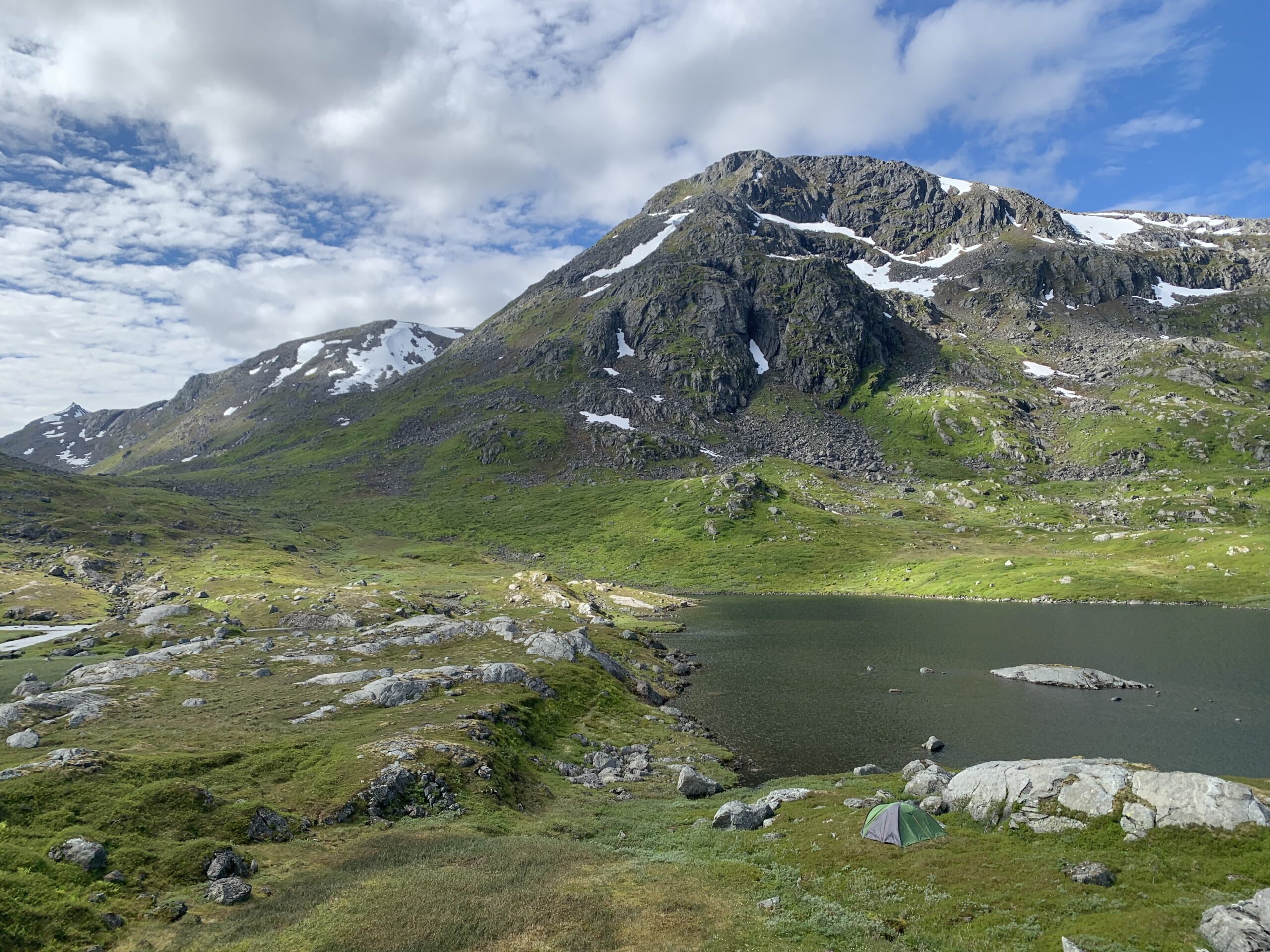
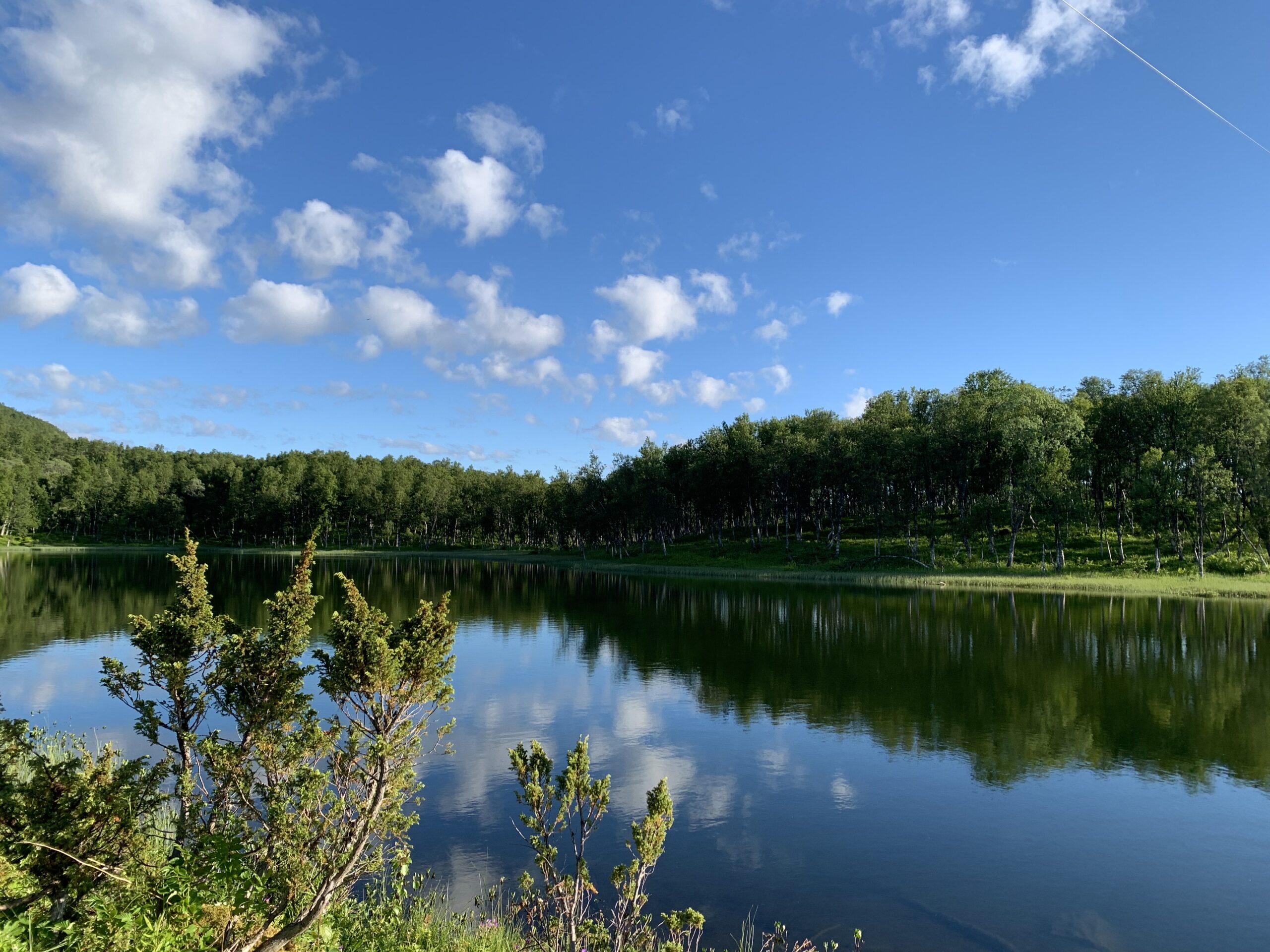
After a few months away I eventually got myself back into and around the Arctic Circle. These northern parts have for the past few years had hot summers far above what’s been normal. This year they had a hot spell already in spring, where cloudberries in some areas went into full bloom but still being too early for the insects much of it didn’t get pollinated. By the time I got back to North Norway the summer had settled with a lot of rain and wind. I got into a new sport of closely watching the weather updates. I’ve never before experienced so much chopping and changing in the forecasts. Still, I managed to get several days in the mountains just me and Bentley, even tenting for a couple of days near the mountain tops. On a couple of real sunny occasions also a bit of ocean fishing. And in addition to that, in between weather and mountains being a bit of a tourist. I had a couple of trips to North Norway’s biggest city Tromsø, where I had the chance to enjoy their great jazz festival. I also had a trip to Bodø, this time not to watch their football team, but to visit the island of Kjerringøy (more about that below). And venturing just south of the Arctic Circle I drove around the Helgeland coast at Nesna, Sandnessjøen, Alstahaug and Tjøtta. I hadn’t been in in this area before and actually had a great-great-great-grandmother who came from Botn, where there’s a swimming lagoon just outside Sandnessjøen. The area offers great views of the famous Seven Sisters mountain peaks, also seen on the way to Alstahaug where the famous baroque poet & priest Petter Dass (1647 – 1707) reigned. Long before both my relative and Petter Dass, there was a famous Viking chief at Tjøtta called Hårek, who fought in the battle of Stiklestad (1030) where the Norwegian King Olav II was killed. Hårek of Tjøtta was later killed by Olav’s son King Magnus I’s men.
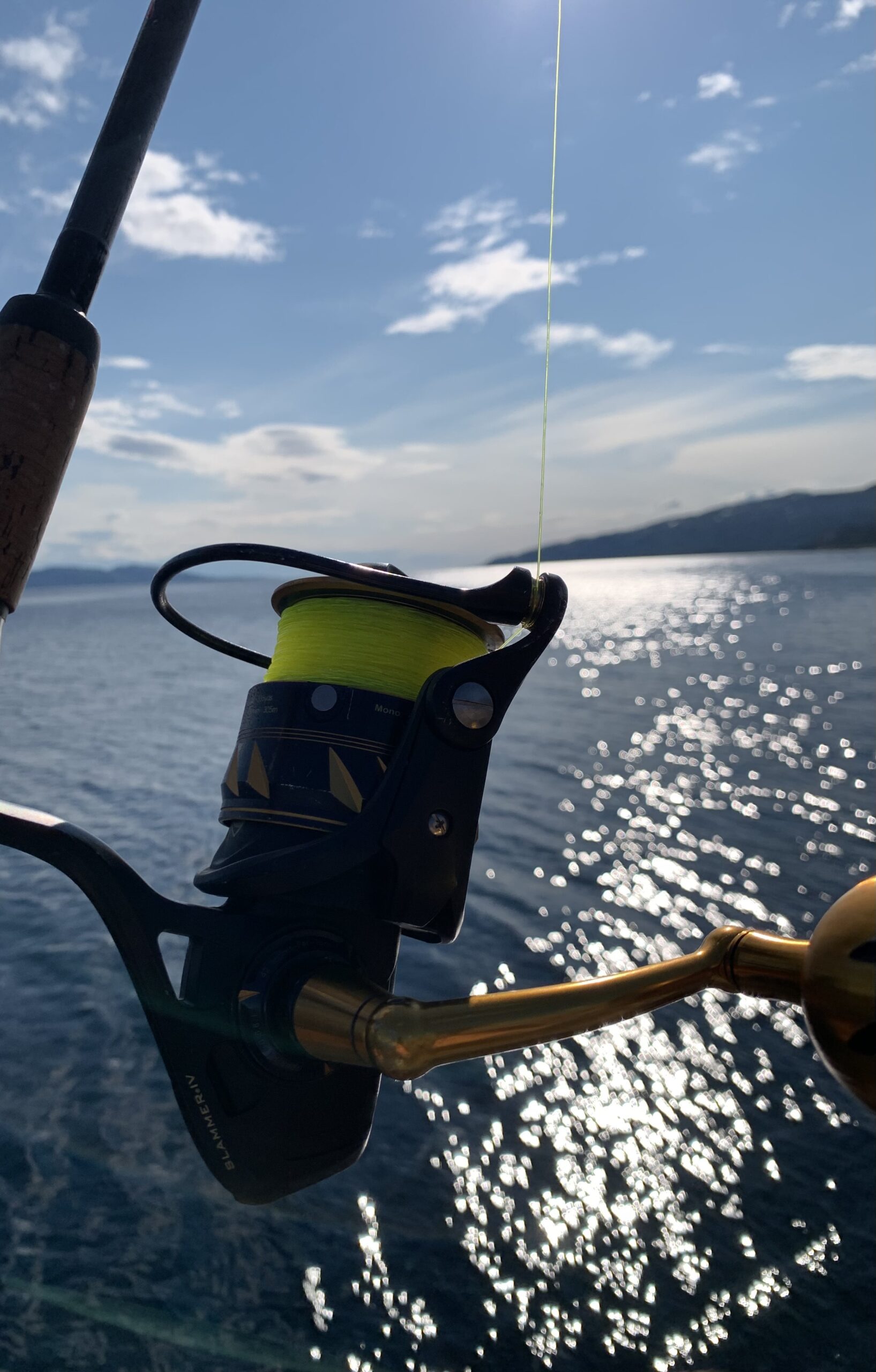
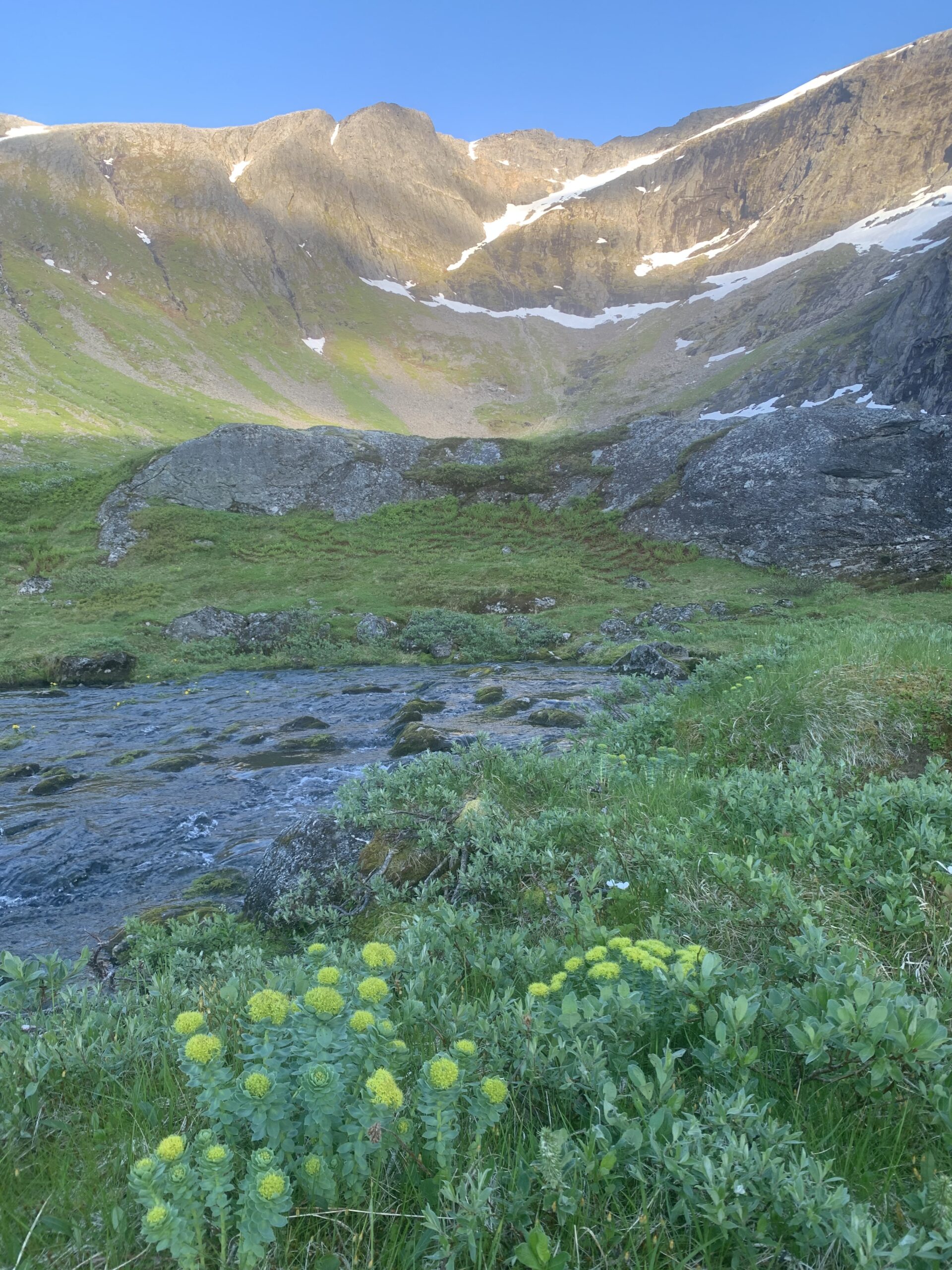
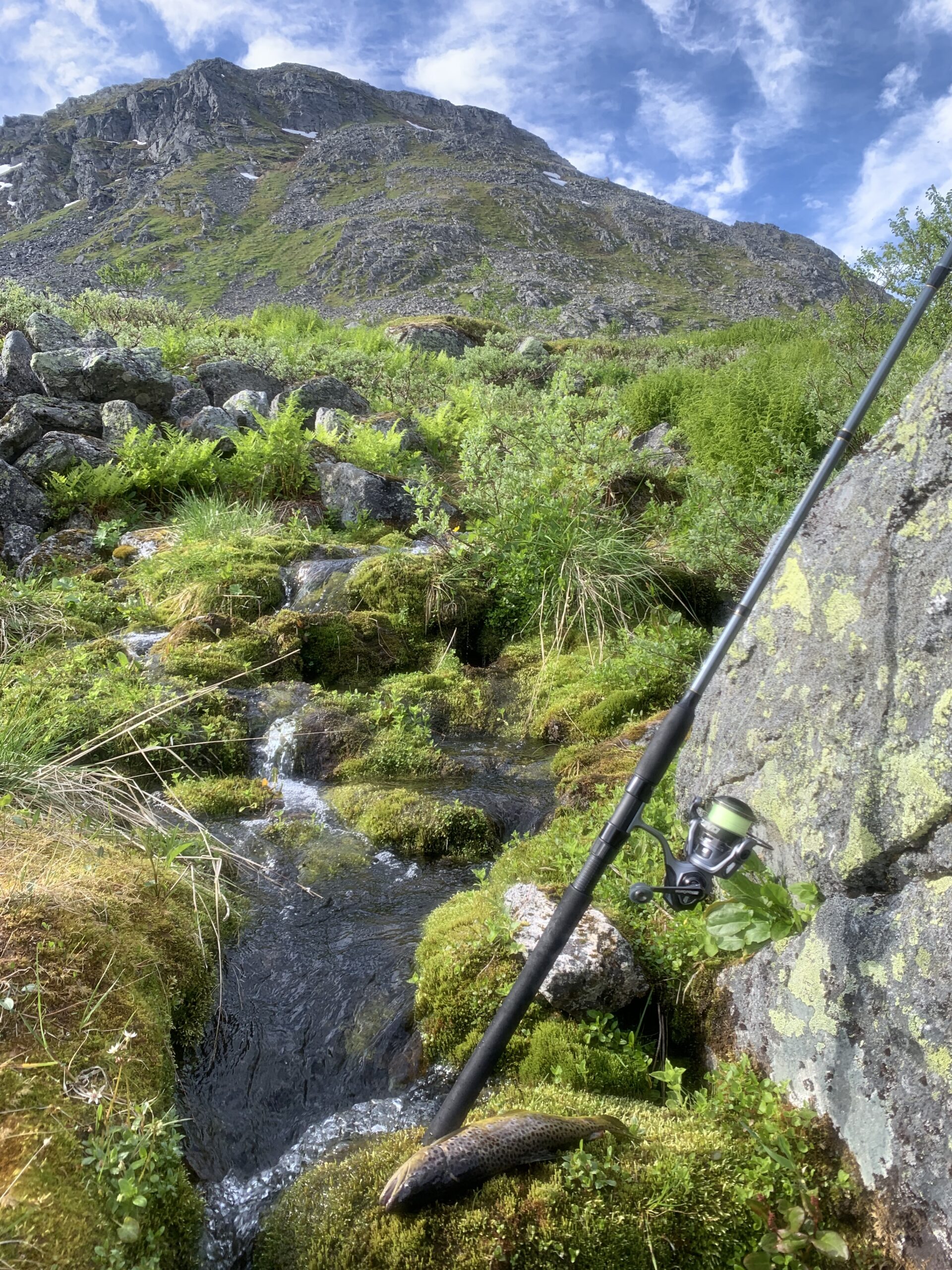
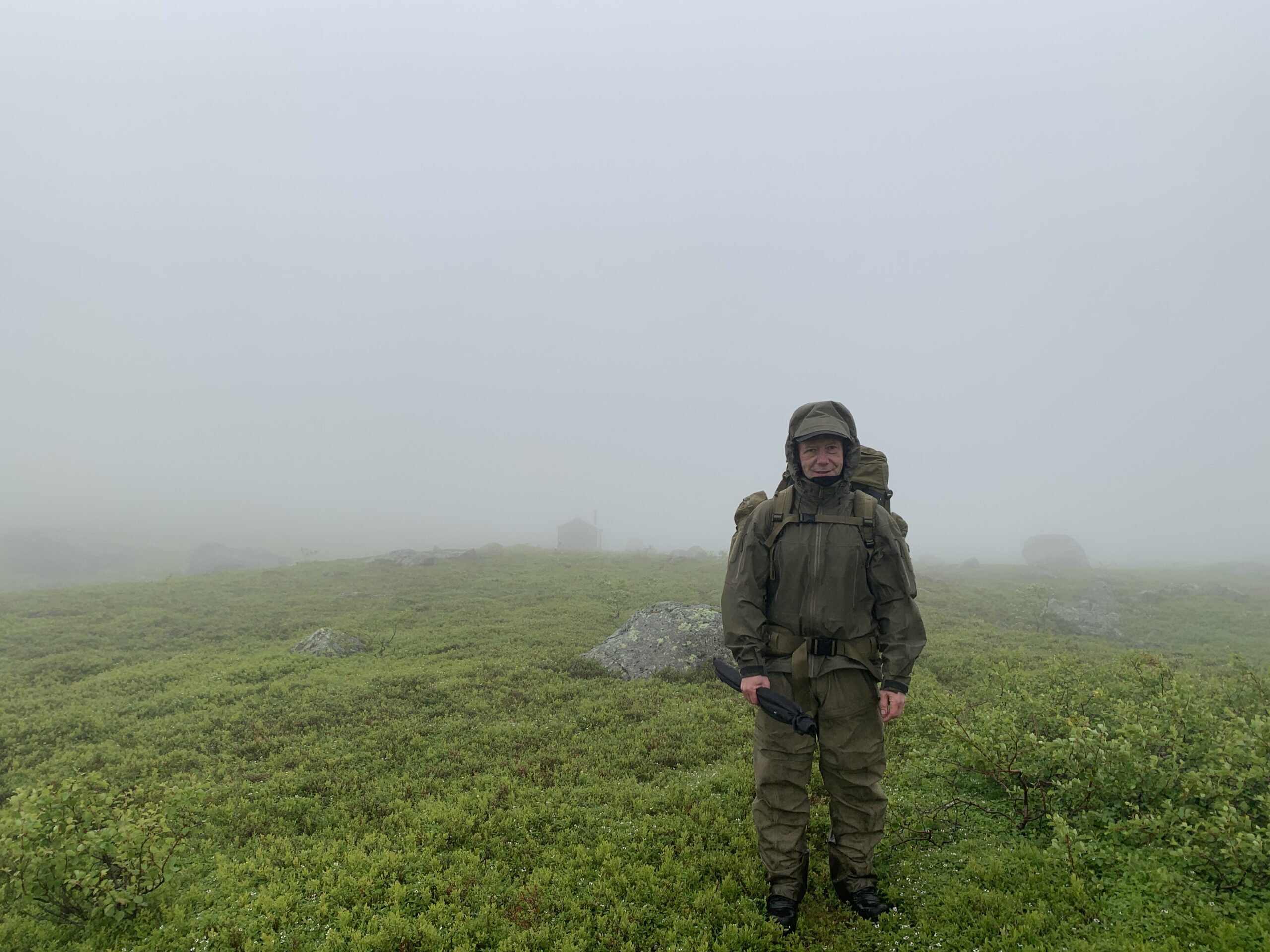
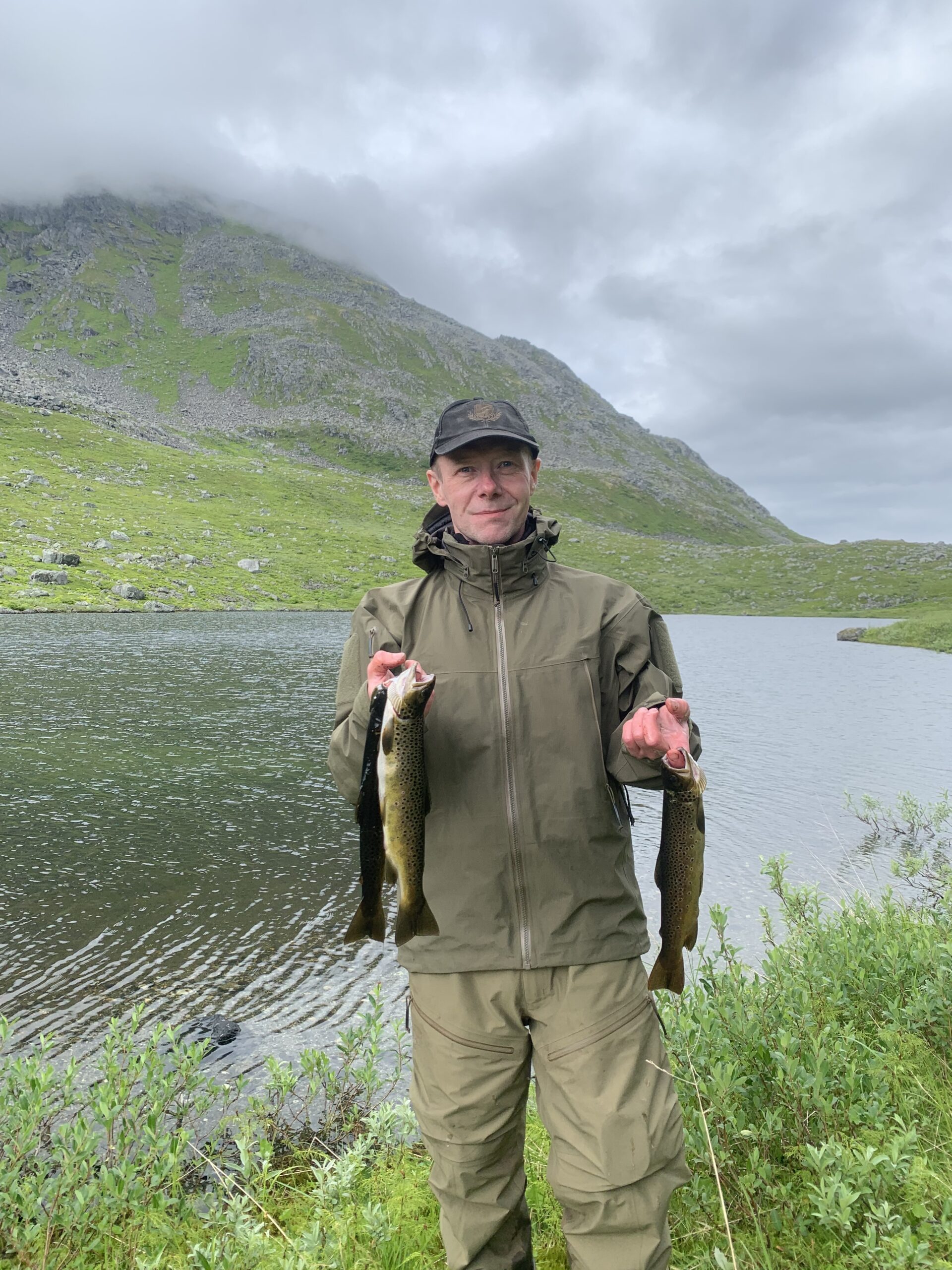
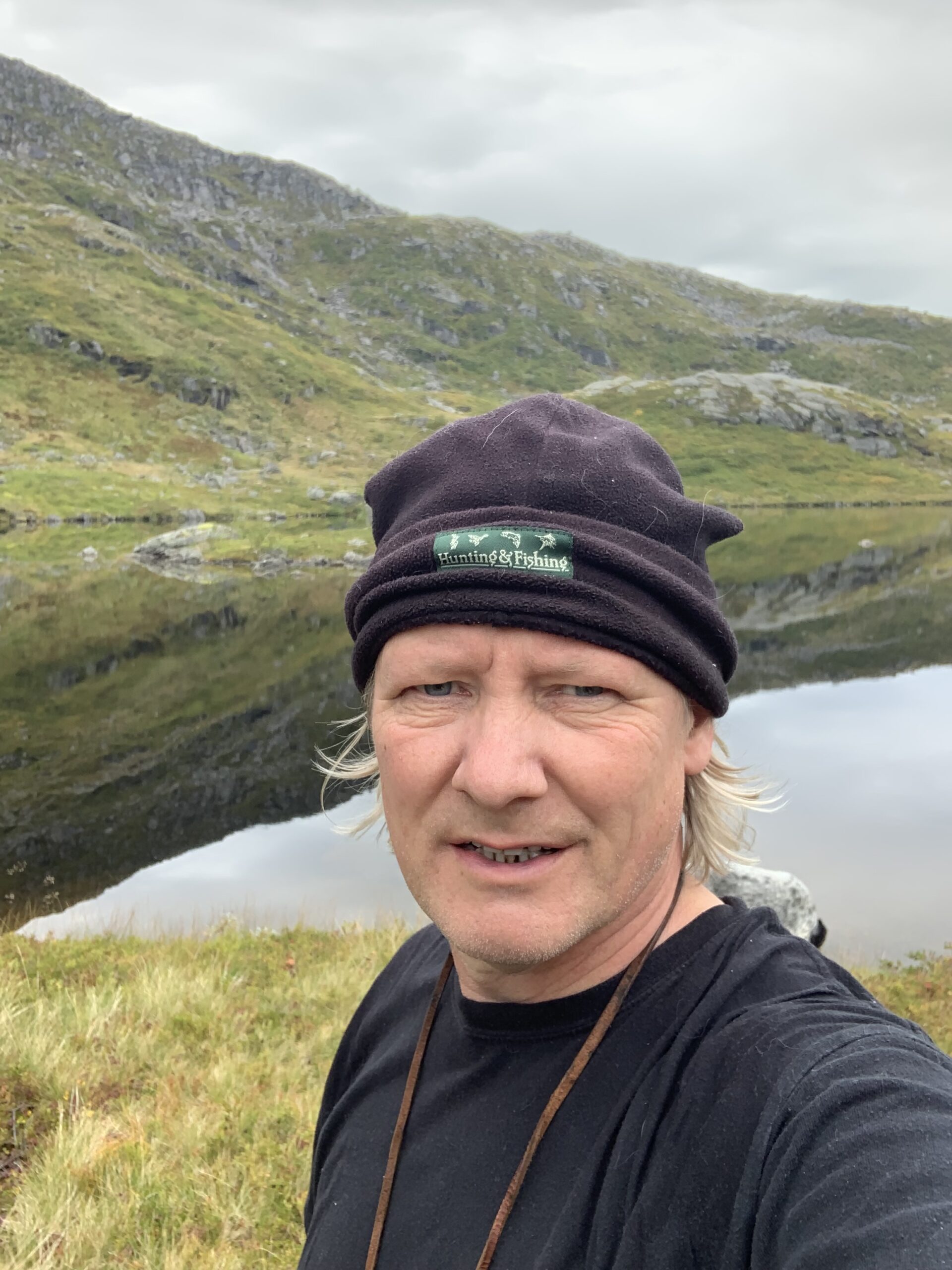
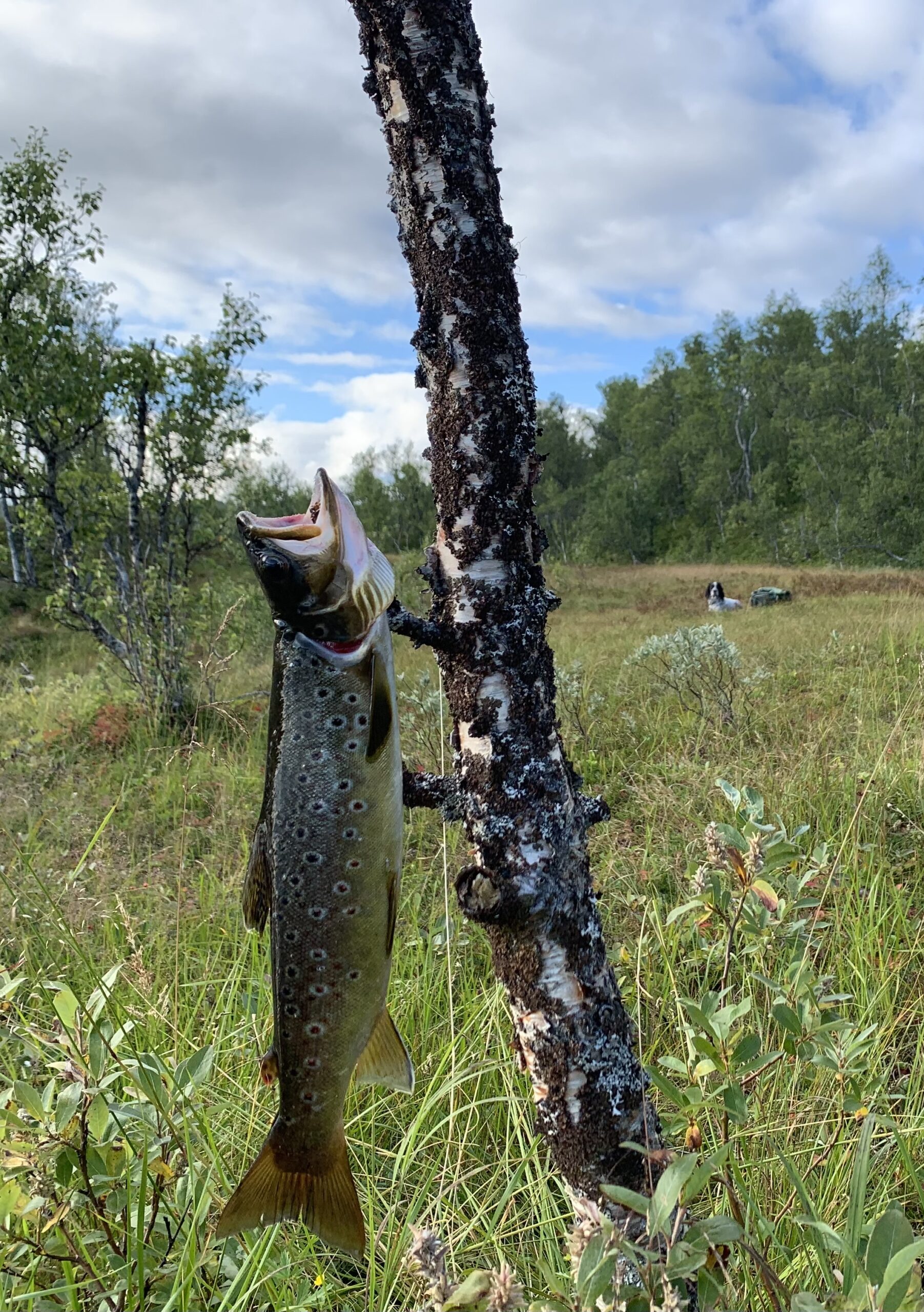
My brother Knut soon arrived for his holidays and the fishing trips intensified. We tramped to several different lakes, also to one that we often fished as teenagers but rarely venture to now. I don’t know what went on there as I barely caught a couple of tiny ones, while Knut kept pulling in good fish… Pictures below from different trips and lakes which shows a bit how the weather fluctuated. The pic of Knut in the fog from our old family terrain since before Petter Dass and possibly even Hårek.
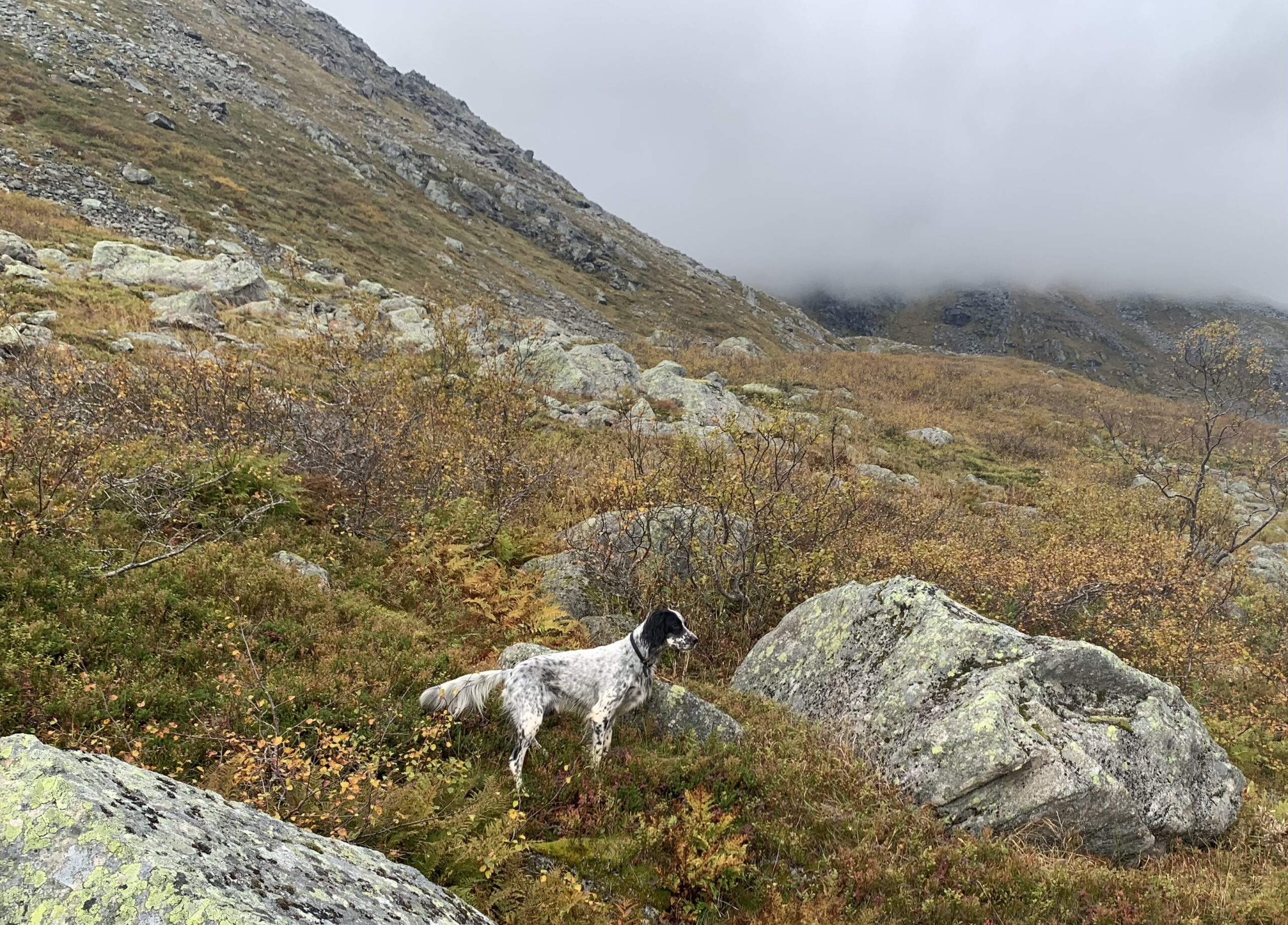
On the very first day I had started training Bentley ahead of the hunting season, he got a small but deep wound on the top of a front paw, by the fold between two toes. He wasn’t limping too much, but I was afraid that the wound could grow and potentially also get infected. At the same time, I was reluctant to have it stitched up as that could cause complications and delay it to heal in time for the hunting season. I agreed with a veterinarian that I would just keep putting on an ointment and keep it covered to prevent him from licking it. Unfortunately, that stopped us from working him for a while. We may not have had much of that anyway because of all the rain. But it healed and we had another couple of days in the mountains before the season started. That terrain I run him in isn’t ideal for a hard running bird dog, and it’s remarkable that they manage not to get injured all the time.
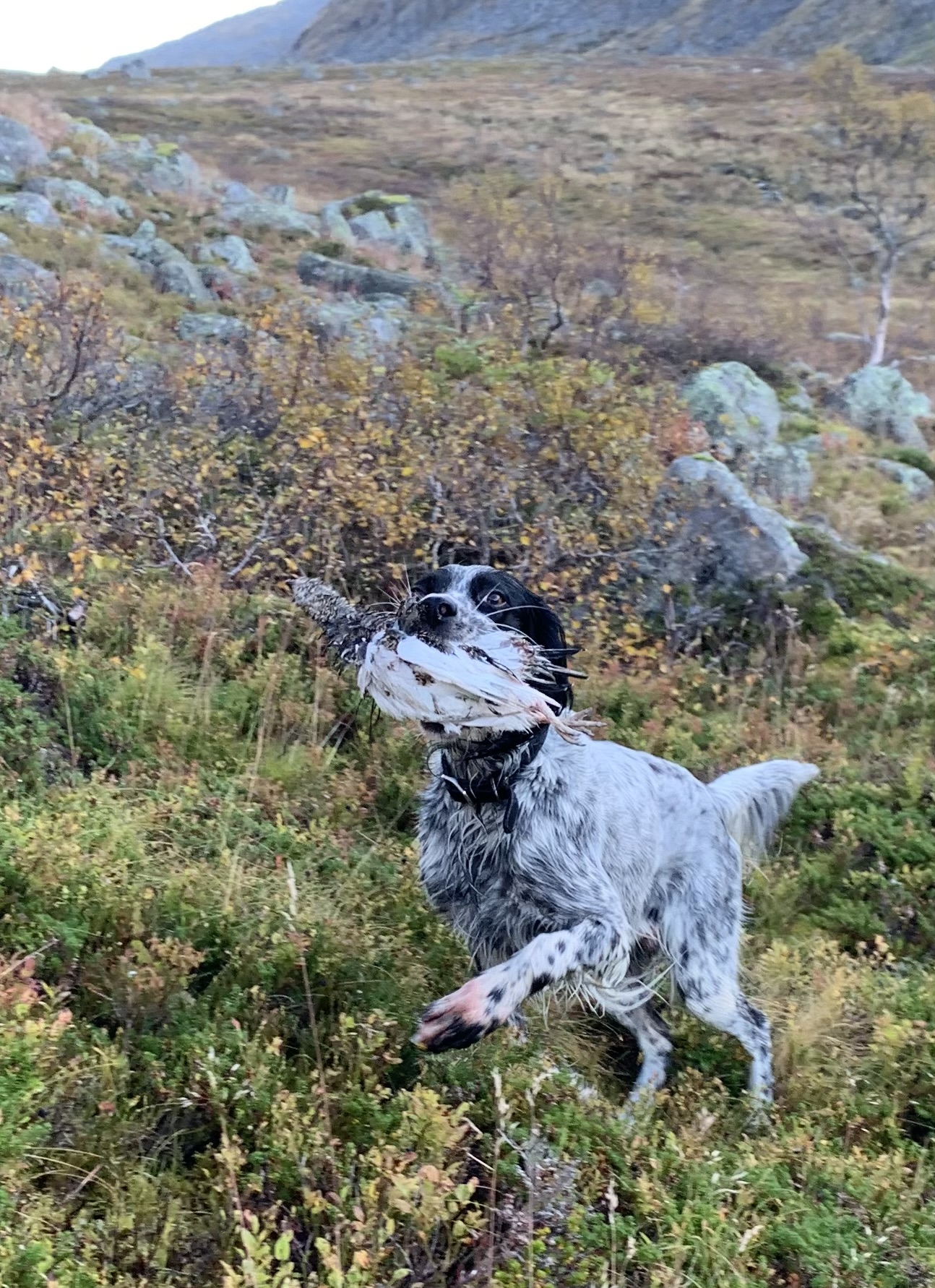
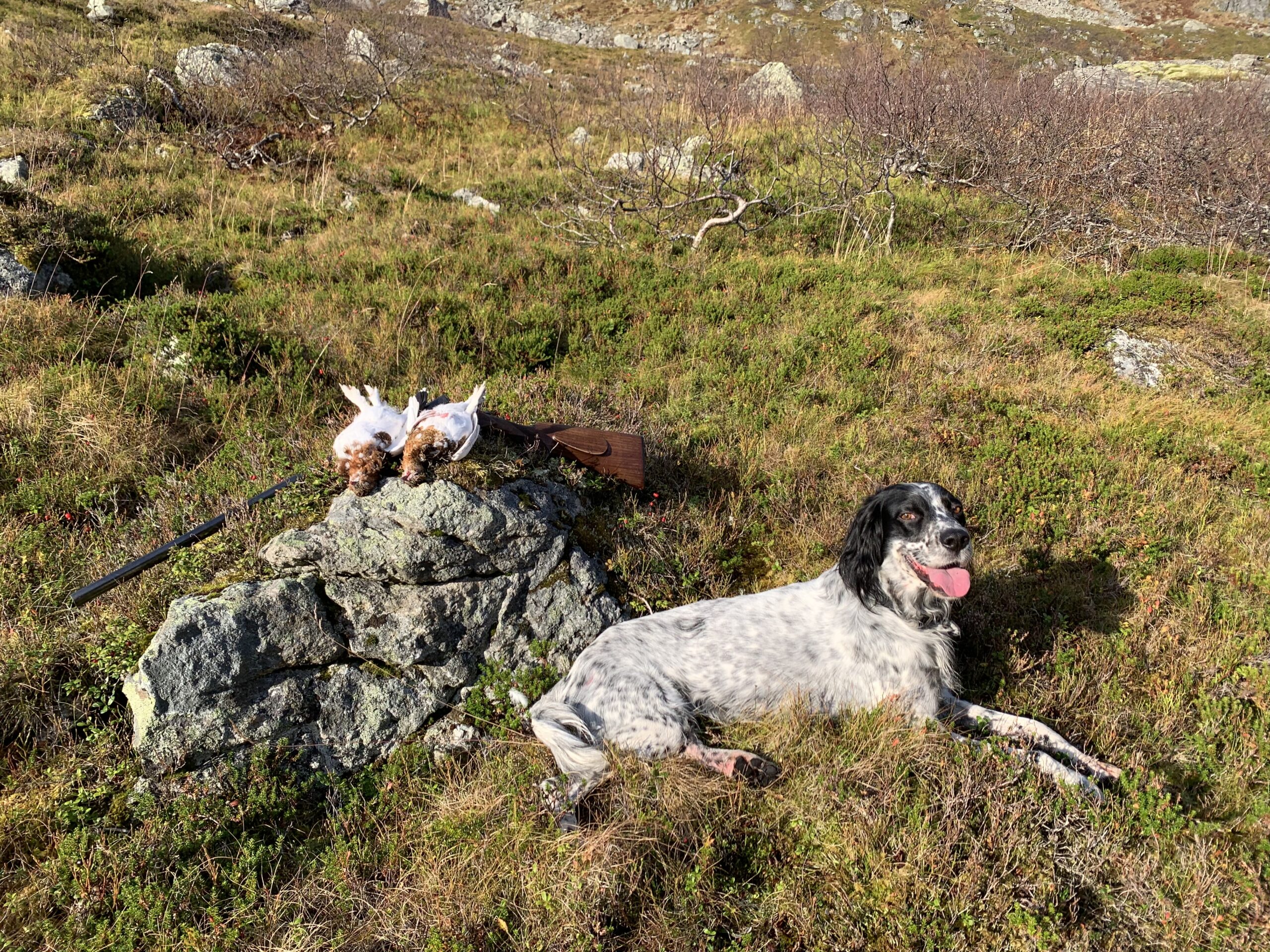
As I have bemoaned here in an earlier post, some terrain including ours, has seen a lot of birds of prey in recent years. Many people who’d like to protect them at all costs do not seem to comprehend how hard it is on the prey they hunt. I found that the willow ptarmigan was hiding in stone scree, like the rock ptarmigan are more prone to, or they were sitting deep in the lower forests. Repeatedly I’d look up and see three or four eagles scanning the area, often along steep cliff sides (and that’s certainly not looking for mice). One day I tramped up to a high area where I had seen a covey of rock ptarmigan the day before, only to be met by two falcons patrolling that area. Other places there were hawks and buzzards. In one mountain where I was above the fog, three ptarmigan came straight over my head at crazy speed, obviously escaping something. I could hear a buzzard squealing in the fog. Later when the fog lifted I saw three buzzards hunting in tandem at different height levels of the mountain. Now and then one of them would squeal loudly as they came over likely hiding places. Fascinating to witness, of course, but I regularly couldn’t help but feeling bad for the ptarmigan. The very few birds that I and a handful other hunters may shoot in that very difficult terrain has no impact on the ptarmigan population. There are similar scenarios on the coast, where the white-tailed sea eagles in many areas are in large numbers. They’re magnificent to watch in the air but much of the coast has not fished well lately and the eagles live on seagulls, eider birds and other seabirds, while the people scratch their heads over why some of these are red listed without any human hunting pressure. And when those eagles can’t feed themselves on the coast they also venture up in the terrain inhabited by the even more aggressive hunter, the golden eagle.
There’s a romantic vision among some people that all nature should be untouched by humans. They choose to hide their heads like ostriches, not wanting to see that nature in itself often is not pure harmony but can be very grotesque and violent, completely without human input. However, whether they like it or not, humans are part of nature. Some claim that we don’t need hunters. For one thing, an experienced hunter with a dog is suddenly handy to come and find animals injured in traffic. In Norway alone there are 22 000 traffic accidents with wild game per year, more than 14 000 of them are roe deer. And those with total anti-hunting agendas need to understand that in small communities around the country, away from the city pavements and soy lattes, people hang on in those areas with great anticipation towards the few days per year they can go hunting. To challenge themselves and their dogs to take part in nature and harvest healthy food, it’s a lifestyle that gives quality of life.
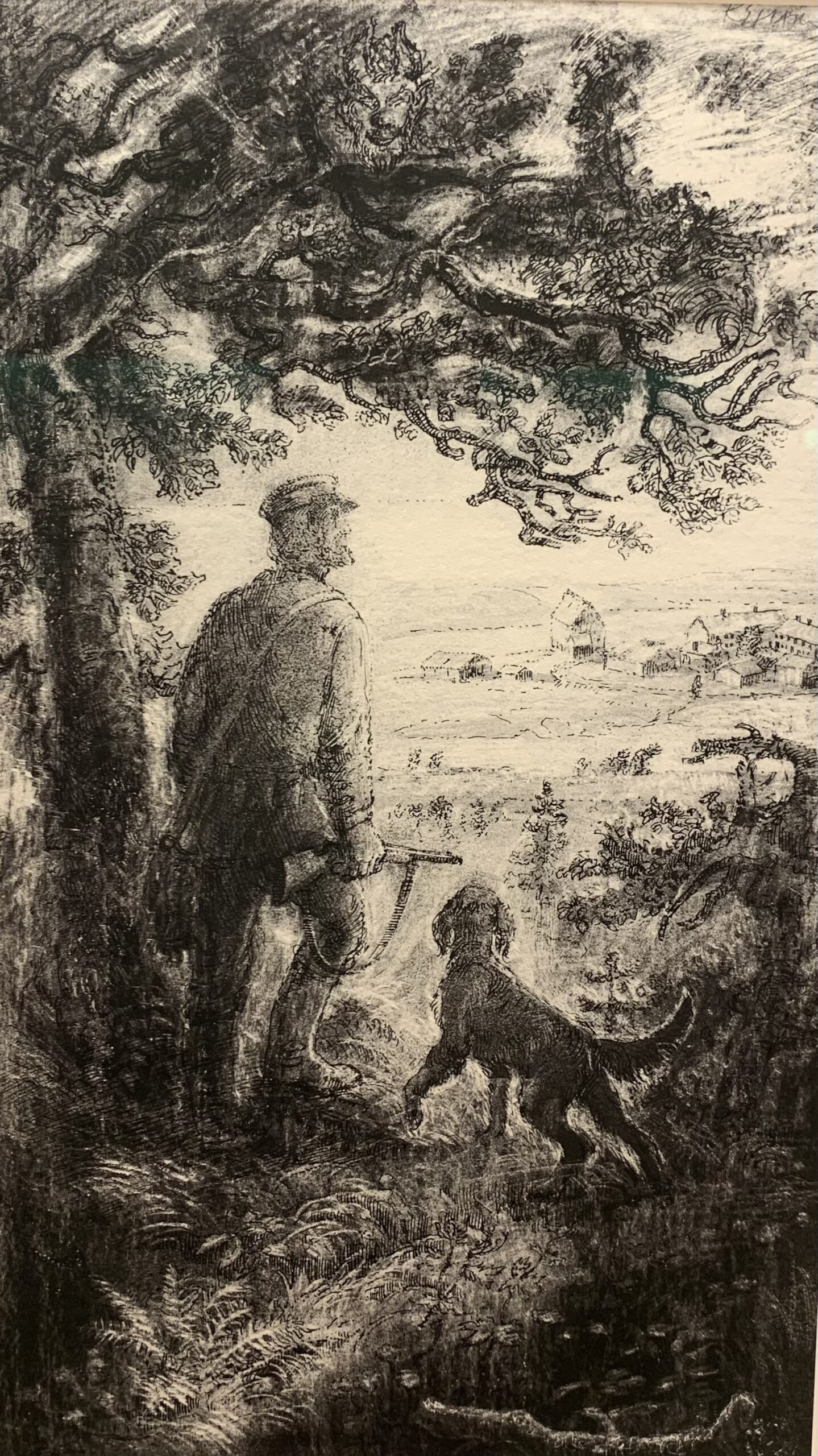
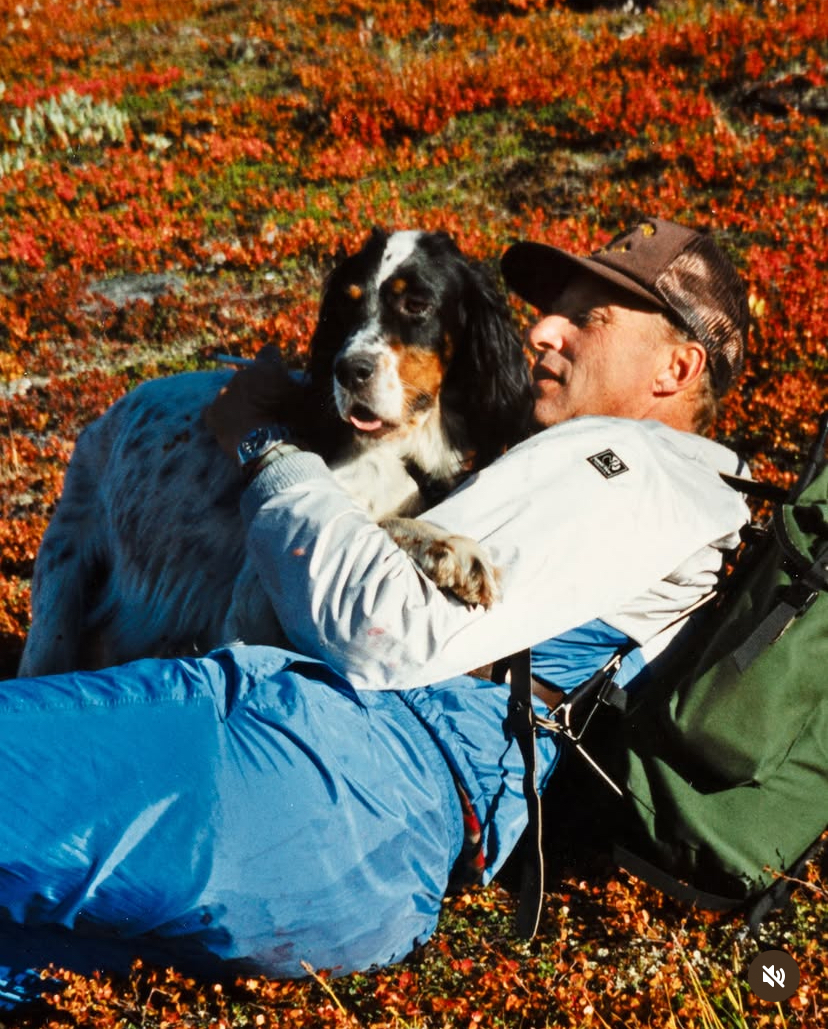
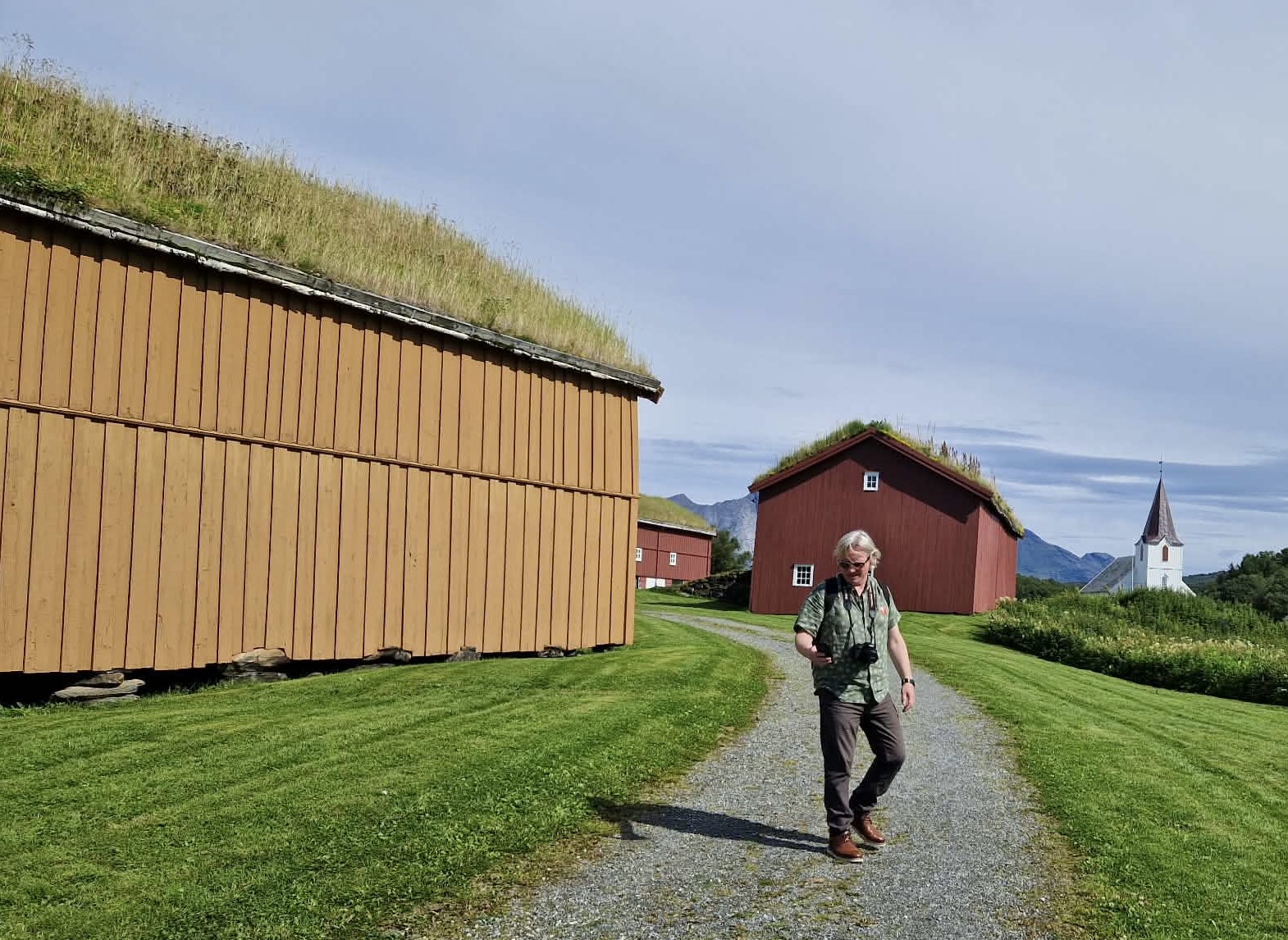
A stunning day on Kjerringøy, walking around at the trading post portrayed as Sirilund in Knut Hamsun’s great novel Pan.