In the middle of January, I watched the premiere of the Norwegian documentary Havfolket (“The people of the sea”), a film celebrating the people who have spent their lives living and working along the weather exposed Norwegian coast. It’s solely produced with old archive film footage, brilliantly edited and narrated by several Norwegian personalities who have grown up on the coast. This is my own people and where I come from. And still, having tried to settle back here is something I have realised that I’m not quite ready for yet. I was interviewed for jobs within hospital admin (similar to what I did for years in NZ) and immigration work with refugees but I’ve opted to pursue my freelance writing instead, something I did a long time ago. To settle in the Arctic Circle permanently, after nearly 40 years abroad, is something I have to do gradually. In the future I’m hoping to be based in North Norway but right now my mind is everywhere else, in southern Europe and still in Australasia.
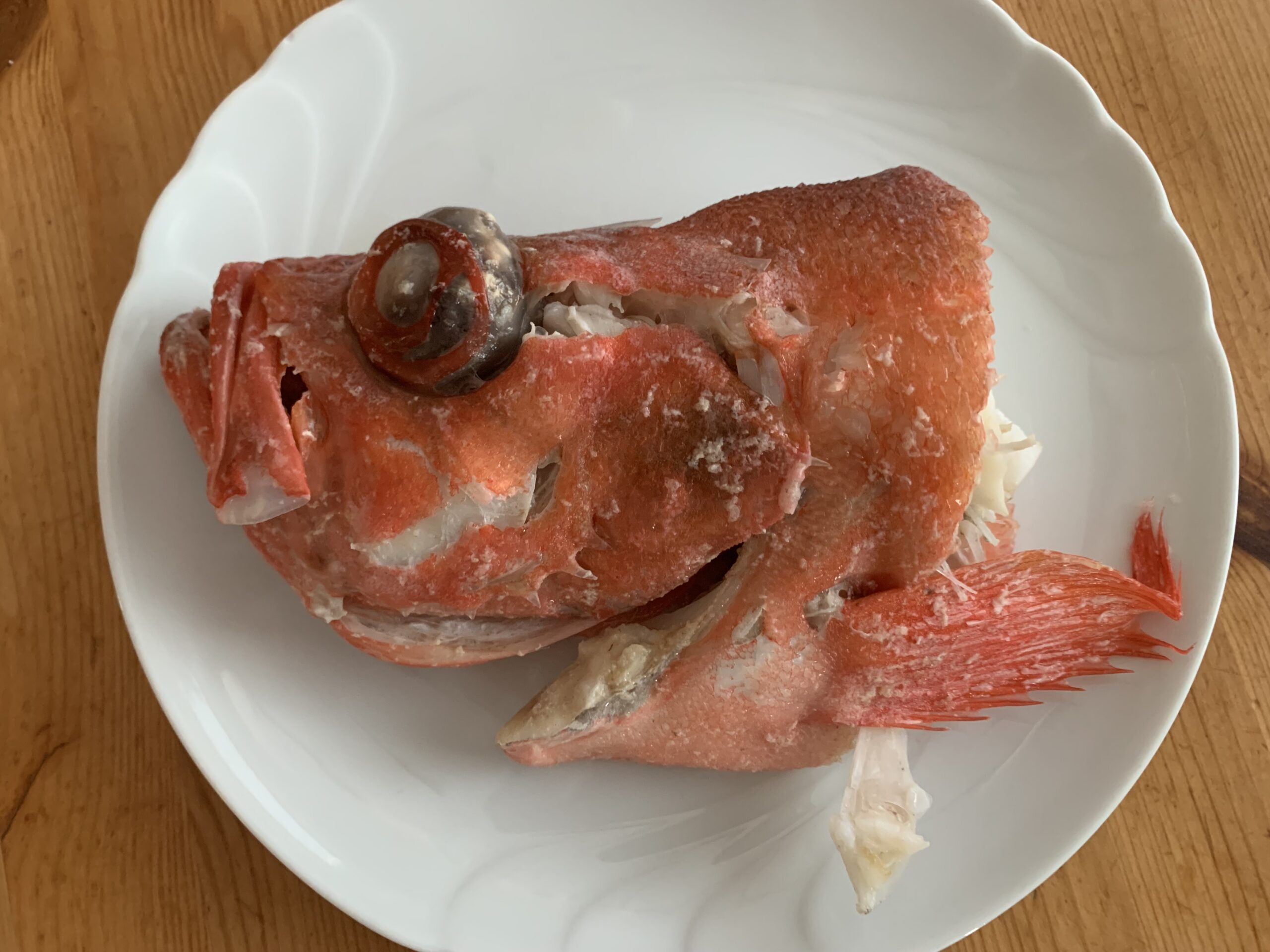
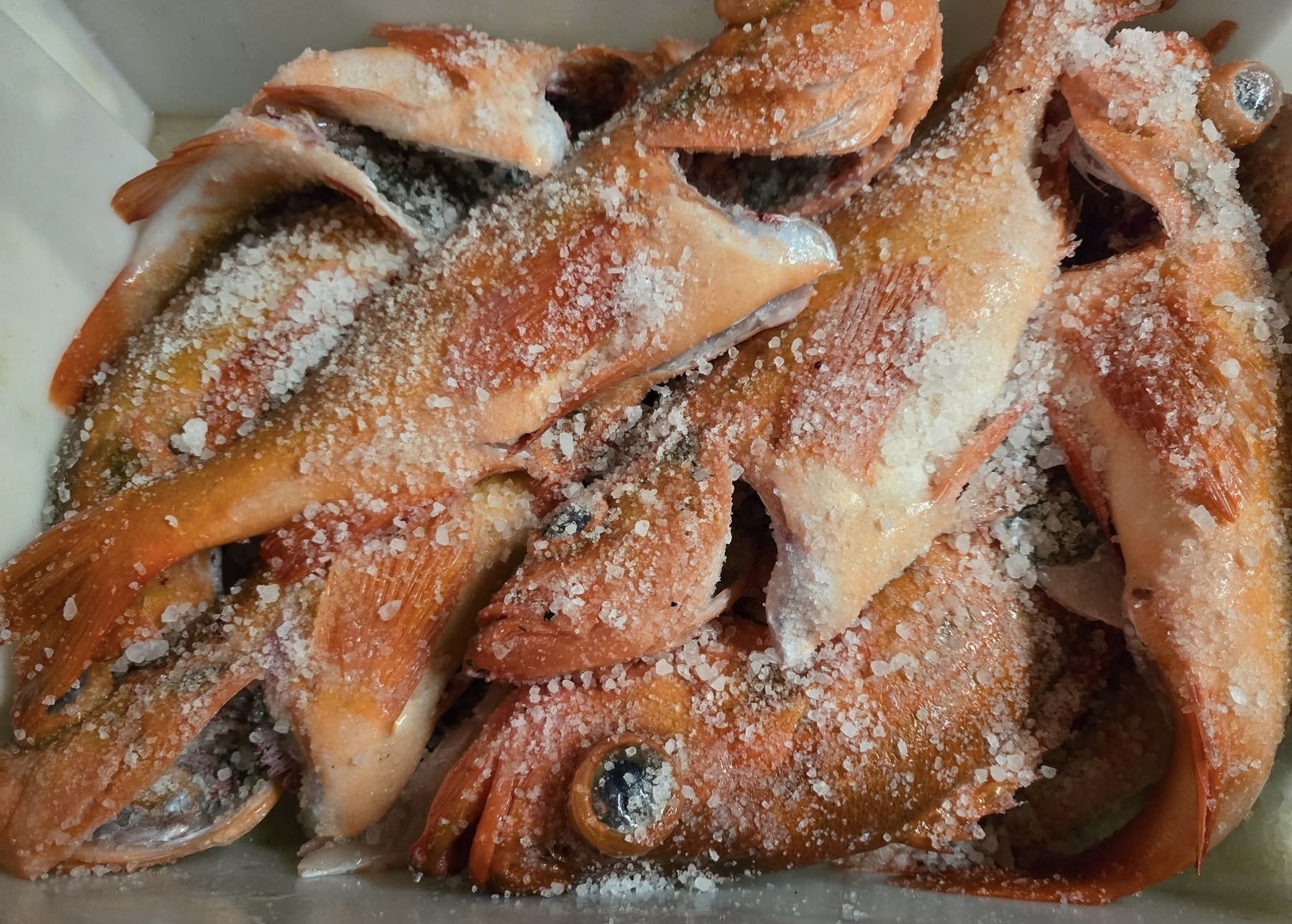
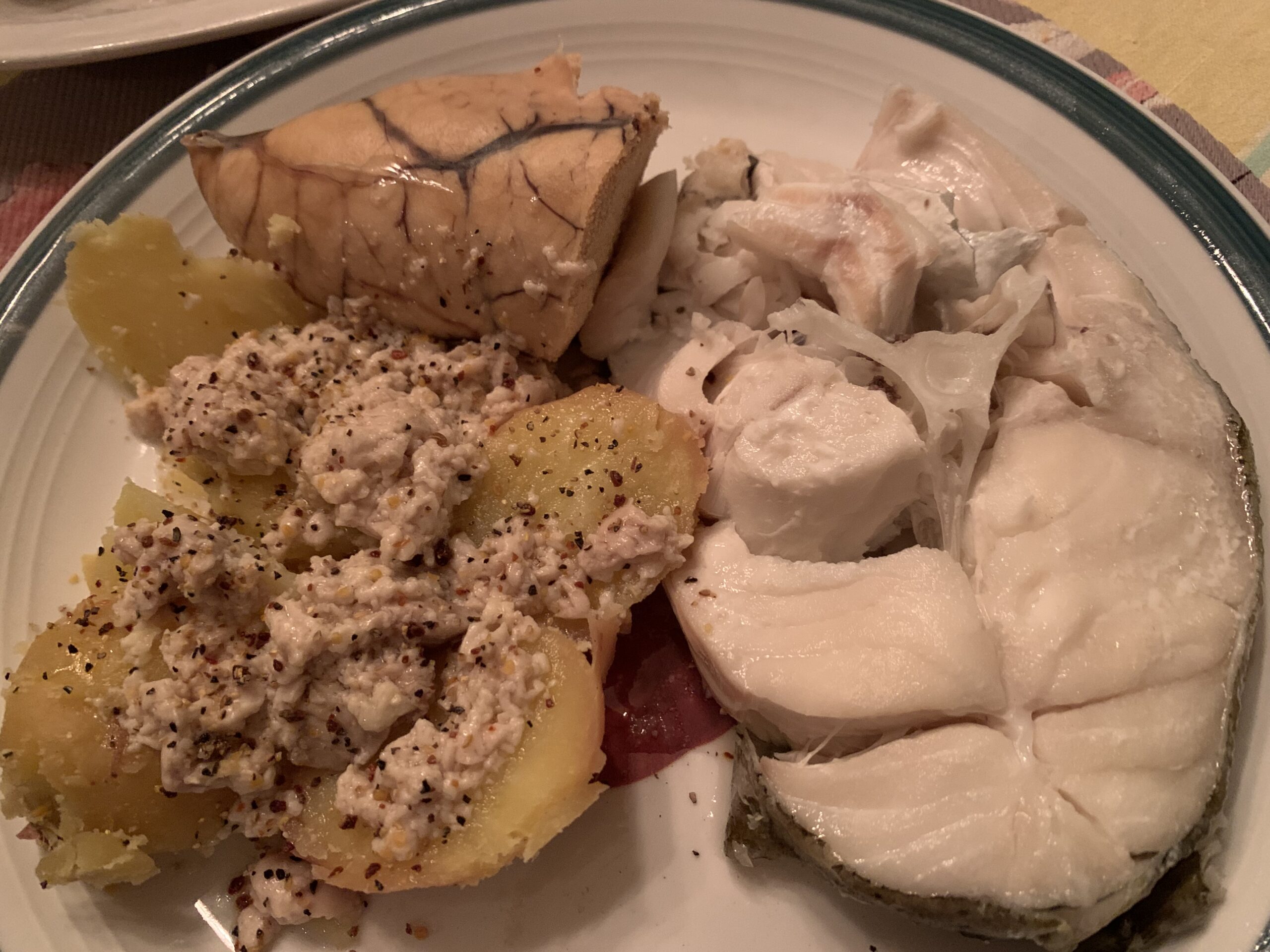
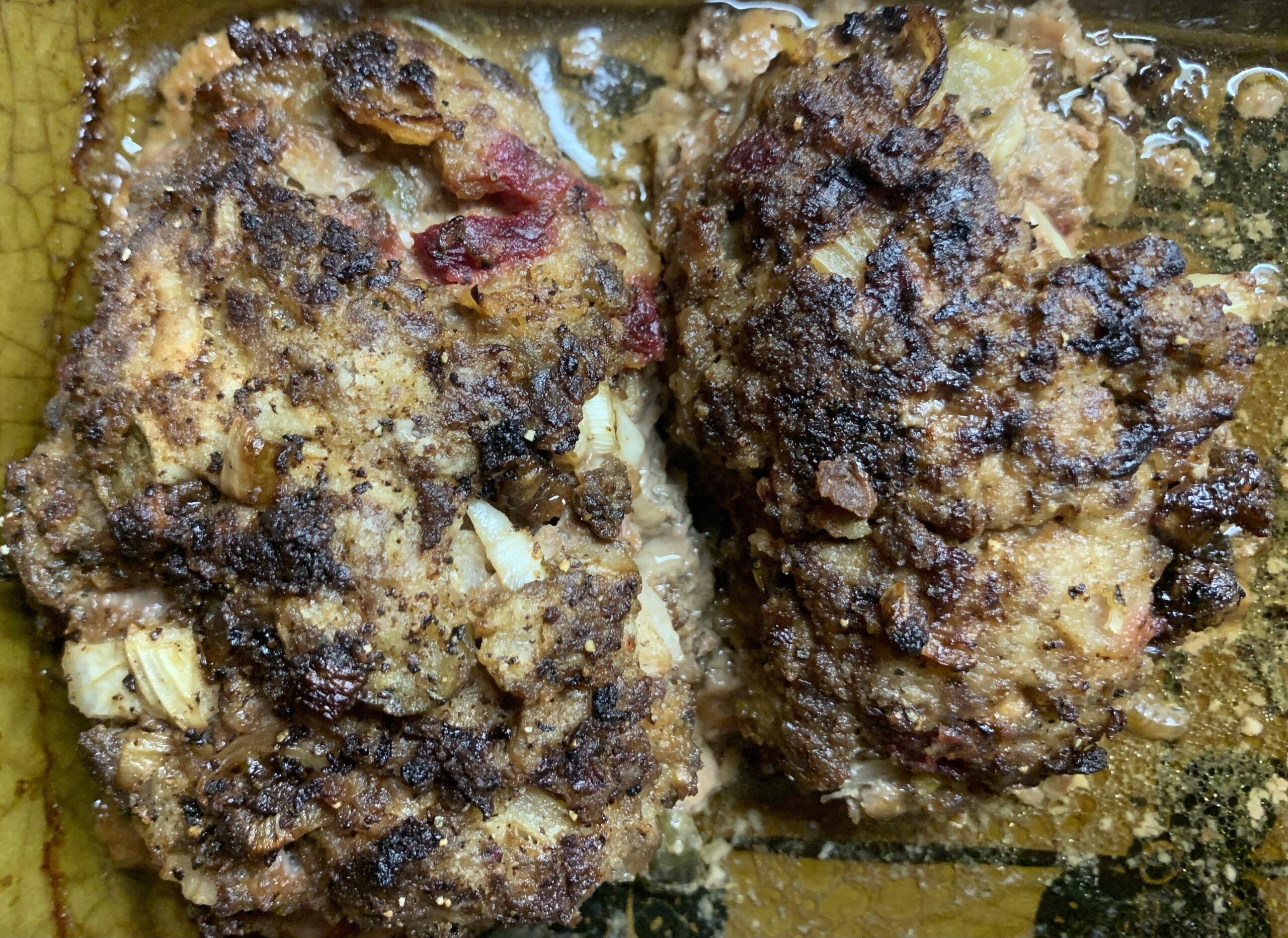
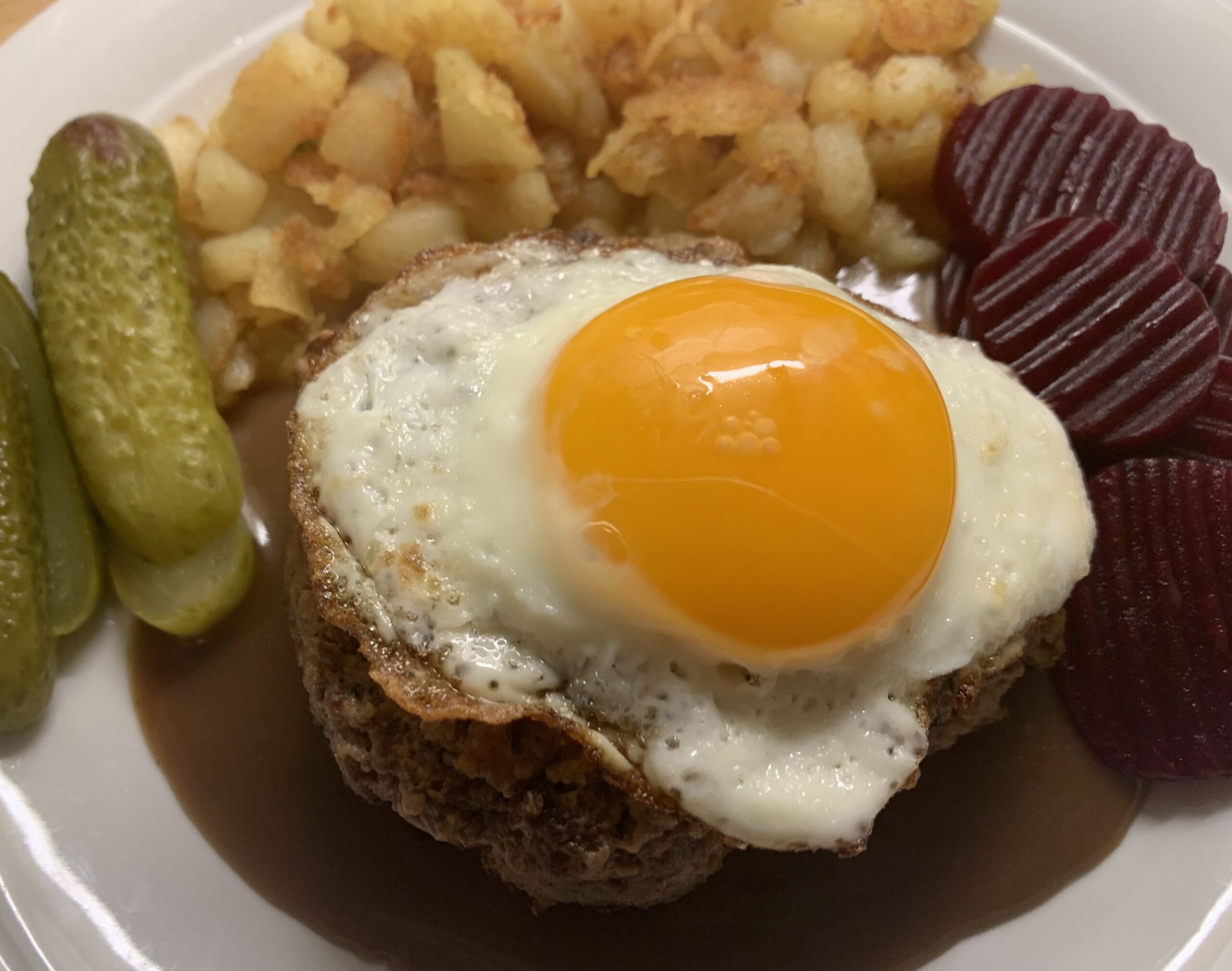
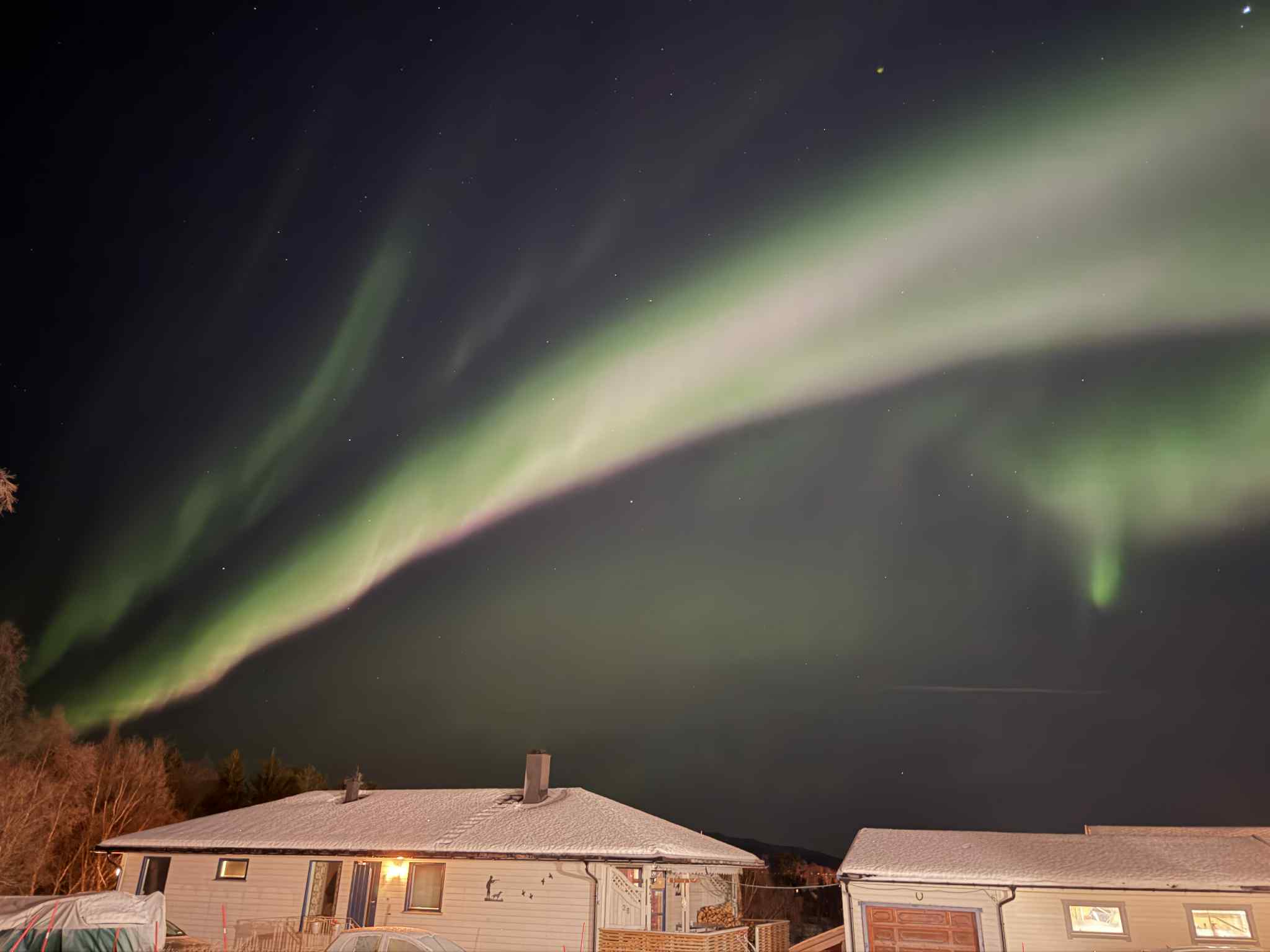
I set about to empty my freezer of ptarmigan and fish caught in the autumn and also some game I had been given by my cousin Øyvind. He shoots a lot of hares and geese and I had some mince mix from this. I decided to do something different with it and made a dish called Biff a la Lindström. The dish was named after the Finnish soldier Henrik Lindström who had it made at Hotel Witt in Kalmar in the 1860s, with inspiration from Saint Petersburg where he had grown up. It has onion, beetroot and capers (or gherkins) incorporated into the patties. They’re panfried with finely cubed pieces of potatoes and served with a fried egg on top. As I had expected it worked perfectly with the hare & geese mince. Pictured below also salted uer (red fish), a big favourite of mine, and I also managed to get the seasonal winter skrei cod with its roe & liver. This past winter was also great with regular displays of brilliant northern lights, as seen below above the house of my uncle’s where I lived. (I think the photo was taken by his neighbour Ståle.)
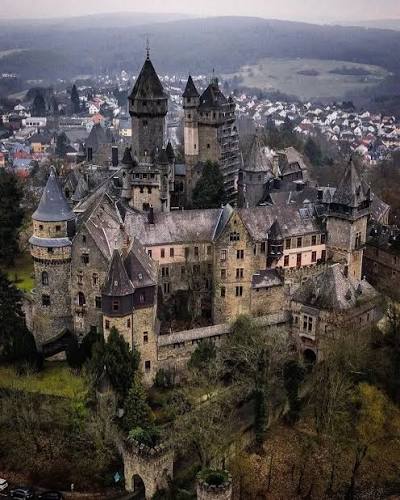
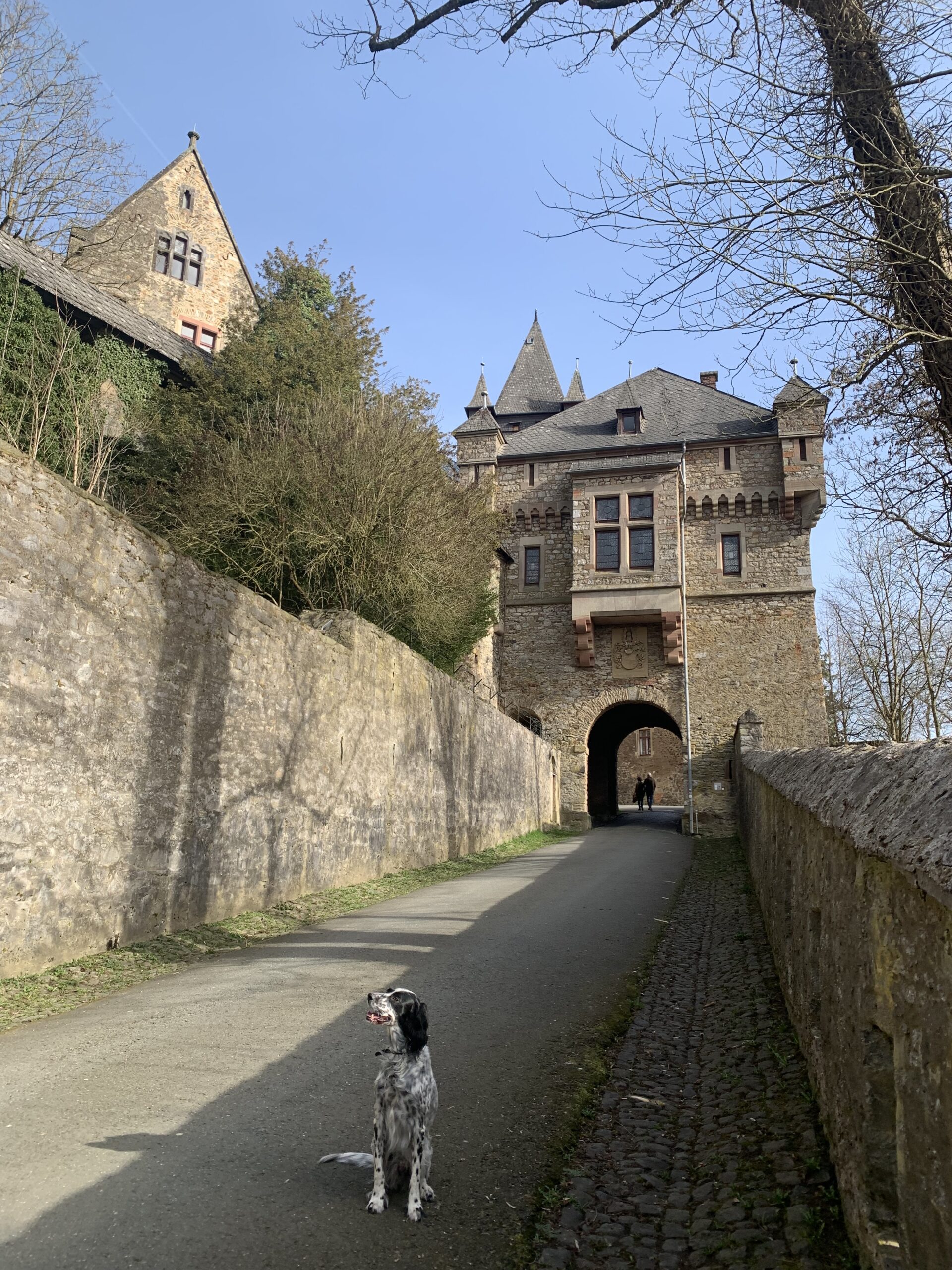
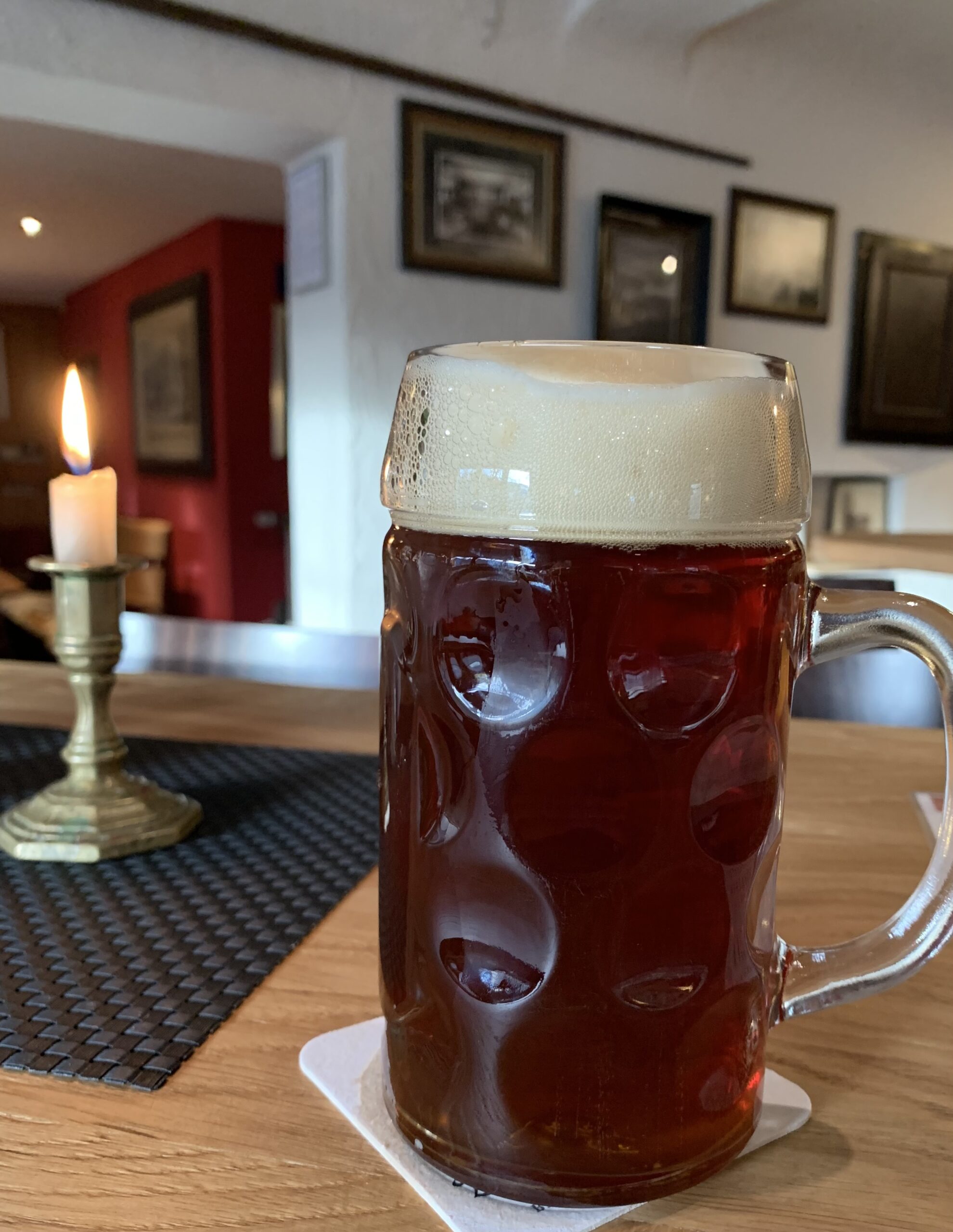
So, in early February I left Harstad and again headed south accompanied by Bentley. Last year, my trip to northern Spain to explore the Galician coastline was cut short. That was again my destination now as I travelled south, meeting spring as it was gradually spreading north. Whilst I always enjoy spending time around France, it’s the Iberian Peninsula that I gravitate towards. However, the first destination was the Hessen area in Germany, spurred on by my longstanding effort in documenting bird dog history. I wanted to visit the Braunfels castle and surrounding area, to learn a bit more about Prinz Albrecht zu Solms-Braunfels, because he is fairly unknown today despite the big impact he had on bird dogs in continental Europe in the the late 1800s. I will be writing an article about that in the near future. I also had dinner and tested some beers at a local tavern/brewery that has existed in the small town since the prince lived there. Appropriately I had a Brauhaus schnitzel, meaning it’s crumbed with leftover malt grains from the beer brewing. In fact, the Germans have several different varieties of schnitzel including local variants like Münchner, similar to a Wiener but also pasted in mustard or horseradish before it’s coated in flour, egg & breadcrumbs. A Hessen local called Frankfurt is served with a herbal green sauce on top, or probably my favourite; the Jägerschnitzel that is served with a creamy mushroom sauce on top. The amusing origin of the name (hunter schnitzel) is because of all the unlucky German hunters not bringing home any game, so the wives sarcastically served them a sauce of mushrooms, as the only wild thing brought home. Schloss Braunfels pictured below, also with Bentley on the way inside it (who has several ancestors bred or owned by the prince), and also a rustic kellerbier that the brewery called Schlawiner, which is the description of a charming rascal.
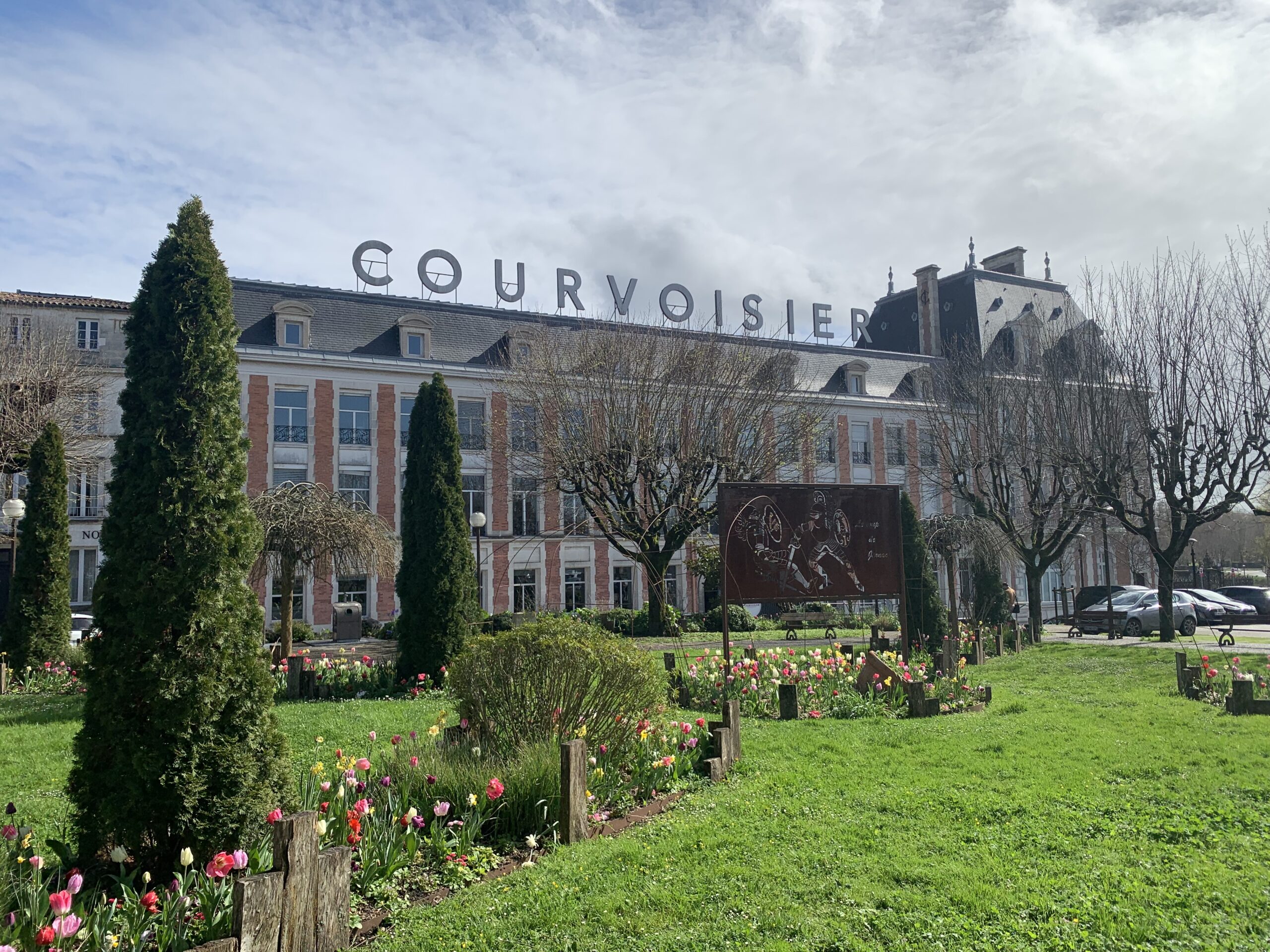
In Germany I also stayed briefly at a riding centre, run by a woman who previously had Irish setters and was an authorised show judge of all the setter breeds. She was impressed by Bentley’s physique and was in particular complementary about his hind quarters, less so about his head. No surprises there but nice to have it confirmed by an official. Entering France from that area of Germany I did it via Luxembourg, where both Germans and French go to tank up with cheaper fuel at huge gas stations. I took my time travelling through France. A few days were spent in the Cognac district of the Charente department. There’s a strong Norwegian connection to the famous eau de vie produced in and around Cognac. Per capita Norwegians are the biggest consumers of cognac in the world, with some of the cognac houses being or having been in the hands of Norwegian families. There is even an Arctic Circle connection, celebrating 100 years this year. A man from Tromsø on a ship heading for America in 1919 ended up leaving the ship in Bordeaux and from there settled in Cognac. In 1926 he introduced his own Larsen brand, «Le Cognac des Vikings». Already two decades before him a lieutenant from Holmestrand founded his Bache-Gabrielsen cognac. Shortly thereafter Sverre Braastad from Gjøvik married the daughter of the Tiffon cognac house and went on to create the Braastad cognac. Their VSOP Reserve sold in neat little plastic bottles have been a great fit in the pockets of my backpack on big hikes up into the Norwegian mountains. In the town of Cognac I saw some of the big traditional proucers like Hennessey, Martell and Remy Martin but I made a special effort to visit the chateaus of both Courvoisier and Braastad located in the nearby Jarnac (still in the Cognac district). In general I’ve been more into Scotch whisky and I hadn’t realised how the cognac houses operate a bit differently to the whisky destilleries. In that respect with numerous small grape growers in the Cognac area it more resembles how many wineries operate. Many of the cognac producers are what they call negociants, buying the grapes from various growers within the six different grape growing areas of the Cognac district. There are strict rules about age and where it’s grown to grade the Cognacs to a VS, VSOP, XO, XXO. The Courvoisier chateau pictured below.
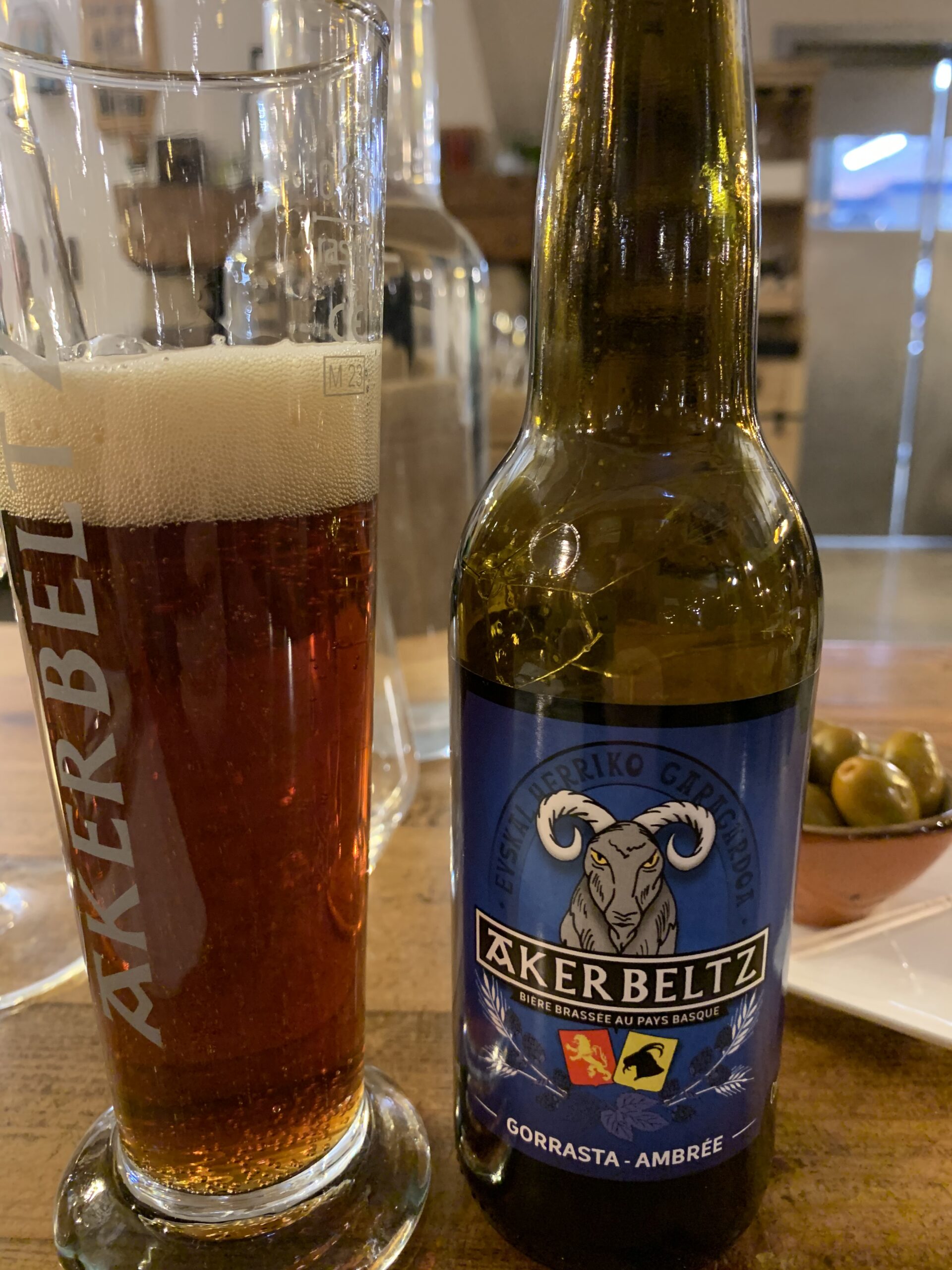
I also spent some time up in the hills of the French Basque area, where I learned about a great French author called Pierre Loti (1850 – 1923) after I happened to stay in the rooms he at one stage occupied and wrote in. There I also found a brilliant restaurant and was introduced to an excellent local beer, Akerbeltz. Amazing what it’s possible to stumble upon in a small hidden away town in the hills. Or as the Larsen cognac of the vikings state: «for those who are explorers at heart, who are on a mission to learn new things and find new perspectives». The Akerbeltz by the way is a black billy goat in Basque mythology. This reminds me of a Basque pointer kennel I once wrote about called Akelarre, near Bilbao. Kennel Akelarre Akelarre meaning the goat field. In the Spanish Inquisition it was described where people worshipped a black goat. In the German language it was later described as Hexensabbat or in English as Witches Sabbath.
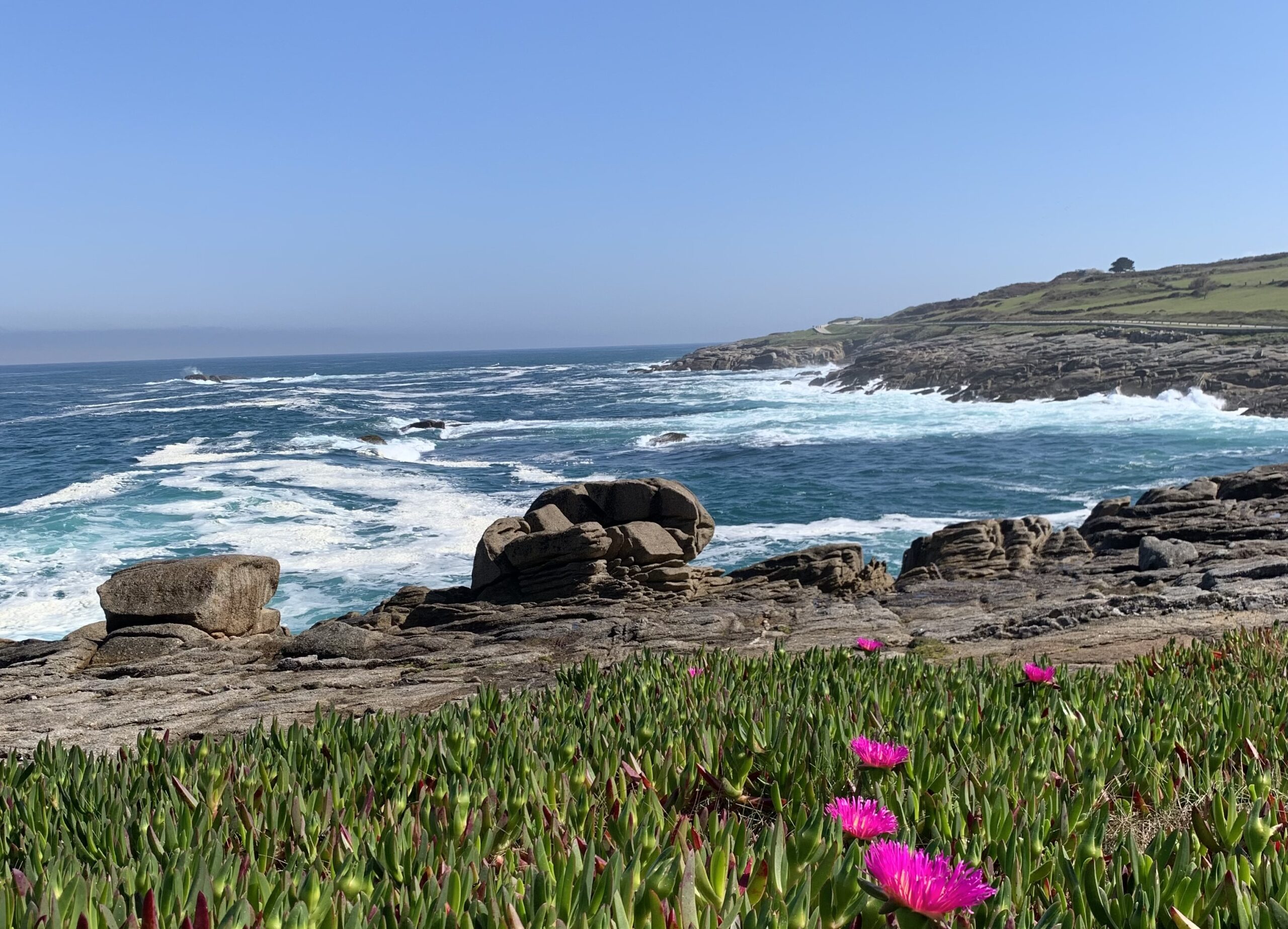
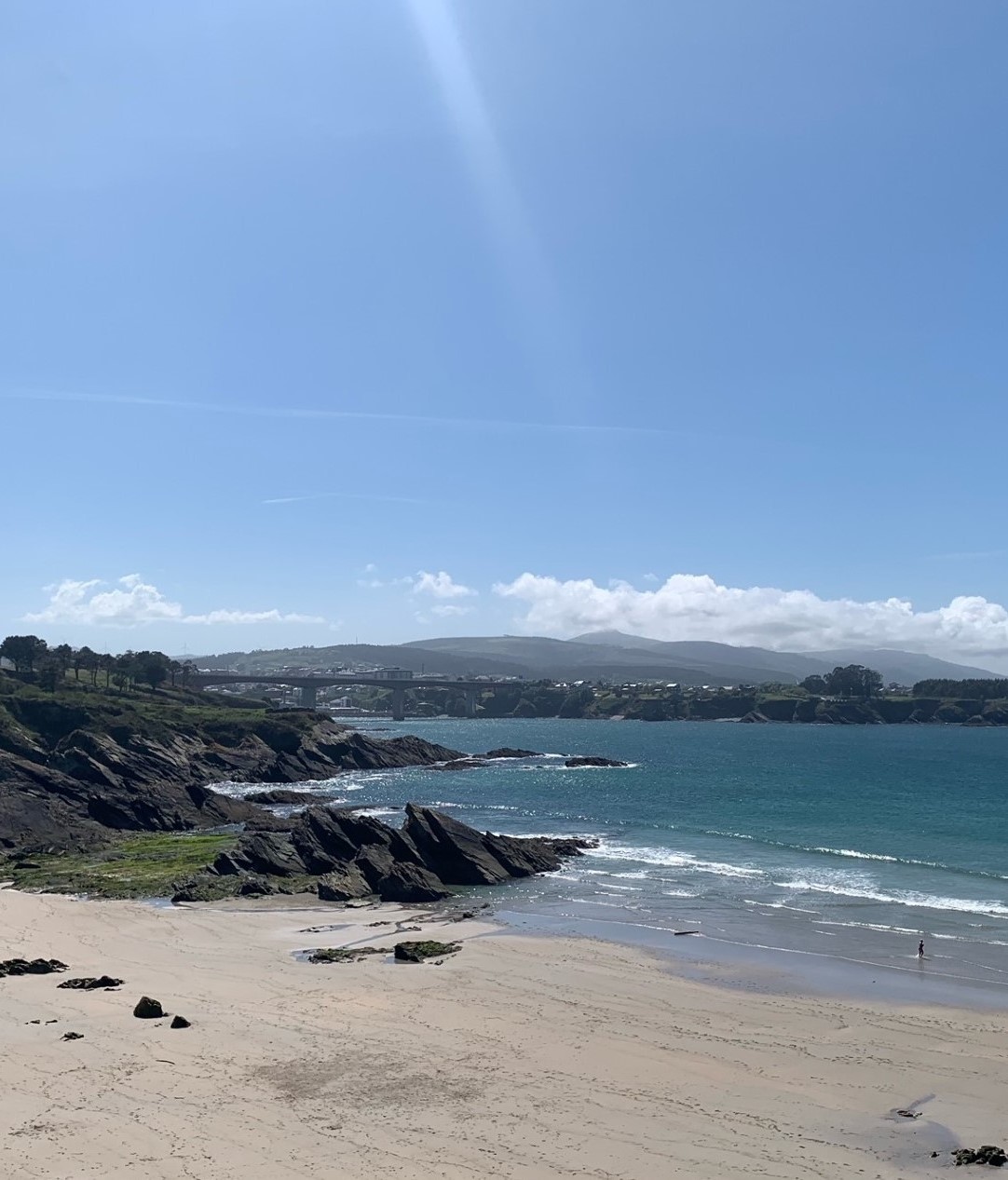
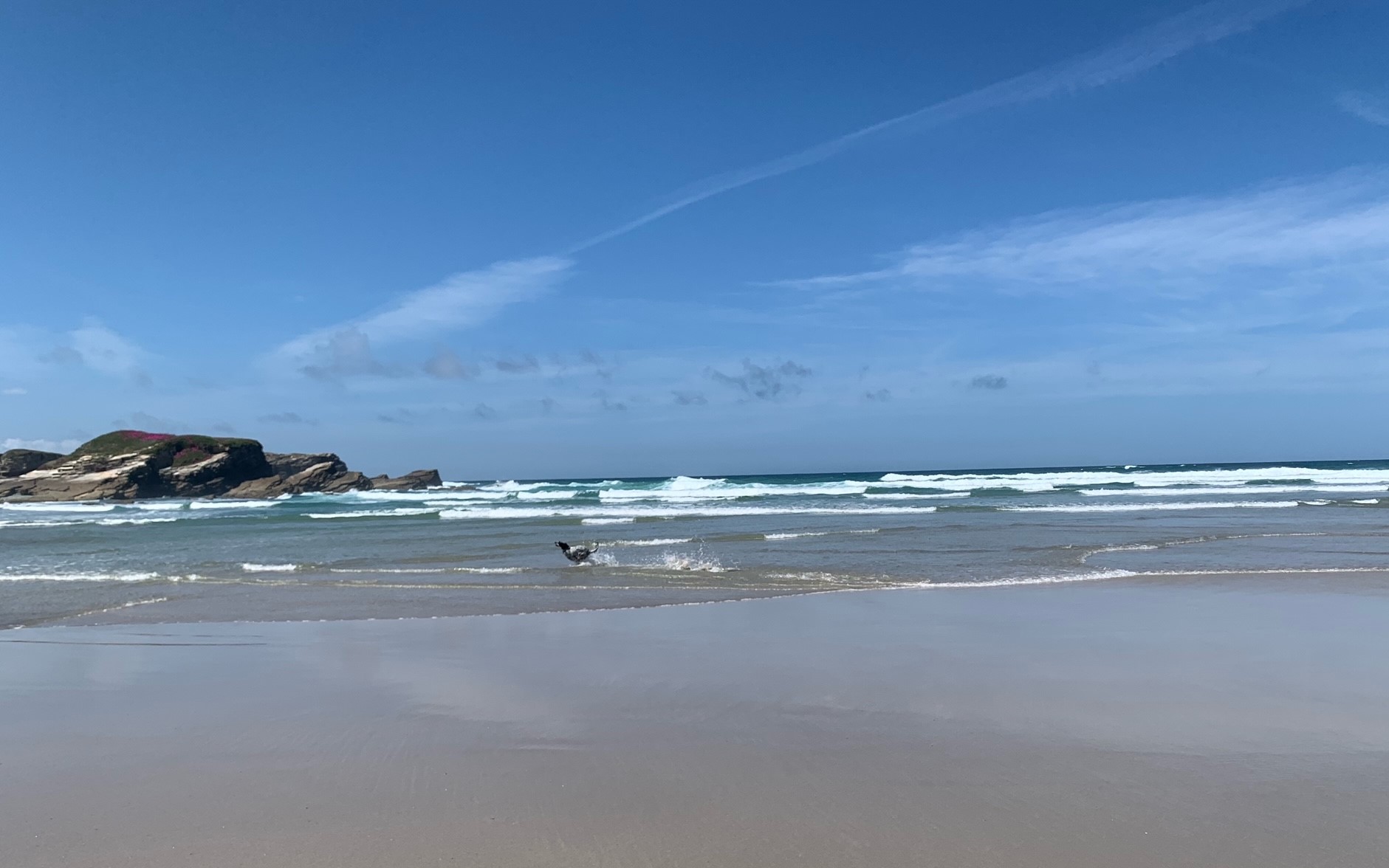
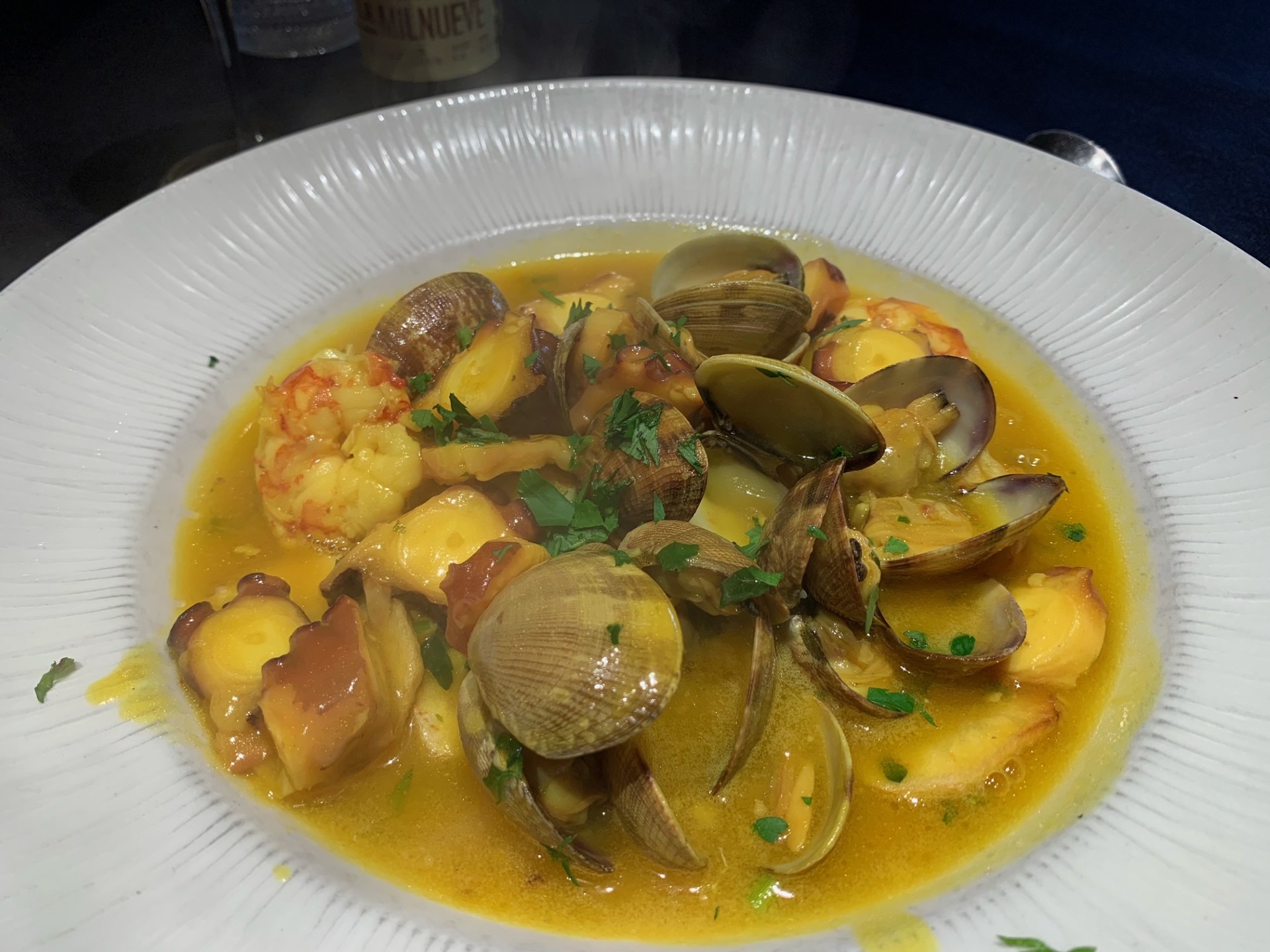
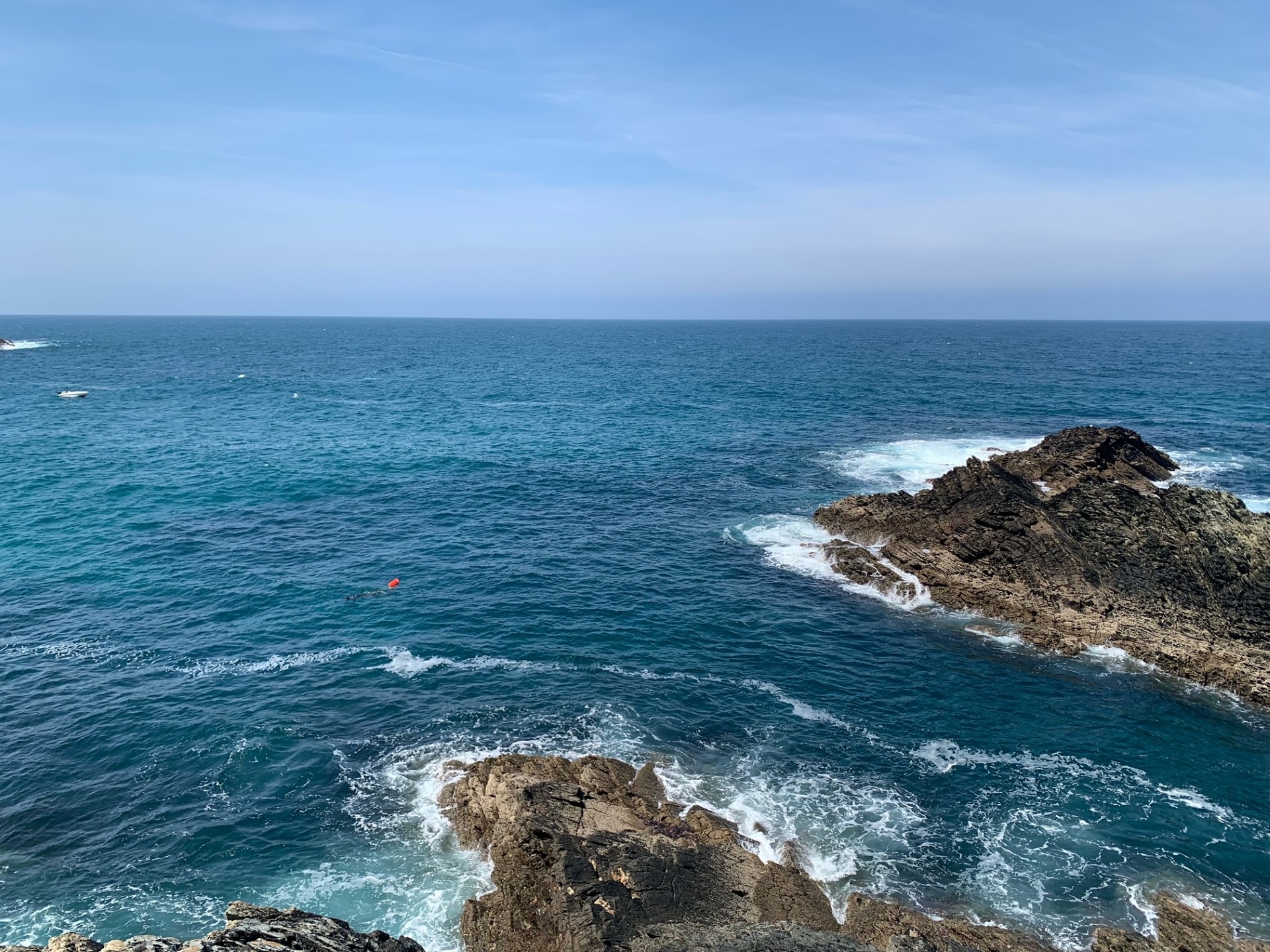
Travelling along the familiar Cantabrian coast, through the Basque country, Cantabria and Asturias I again reached Galicia in the northwestern corner of Spain. The coast gets its name from the Cantabrian Sea, which is what these North Atlantic waters inside the Bay of Biscay is called. I brought my Mares and Wettie dive gear from New Zealand, so that I finally could get in the water again. It had been over two years since my last dives in NZ. Interestingly, in Spain a medical certificate from a doctor is required to engage in spearfishing. So, if you carry a speargun that’s the rule, which I guess is easier to enforce than to regulate freediving or snorkeling activities. You also need a regional spearfishing licence and appropriate insurance cover. It’s not really a problem to get any of these but it is a bit of a hassle. I did not bring a speargun from New Zealand and it can be tricky to travel across borders with as it’s in general classified as a weapon. Some countries prohibit the use of spearguns, Sweden being one. However, at this time I have travelled here more to explore these coastal waters and I can still catch and gather things like shellfish and octopus, if so desired. The way I’ve been cooking octopus in New Zealand is the traditional Pulpo Gallego (Galician style). In that process it’s usually frozen for a week or more, boiled, when removed pieces of potatoes are boiled in the same water. The octopus meat is cut into small pieces and served with the potato, sprinkled with olive oil, pimenton (smoked paprika) and sea salt. More about the seafood here further below. Pictured is the bridge across to Galicia, taken from the Asturian side. I spent a little bit of time in the Asturias both in 2014 and last year and it’s also a very interesting district, and the gateway to the Picos de Europa mountains. Also pictured is Bentley back on his favourite Galician beach from last year.
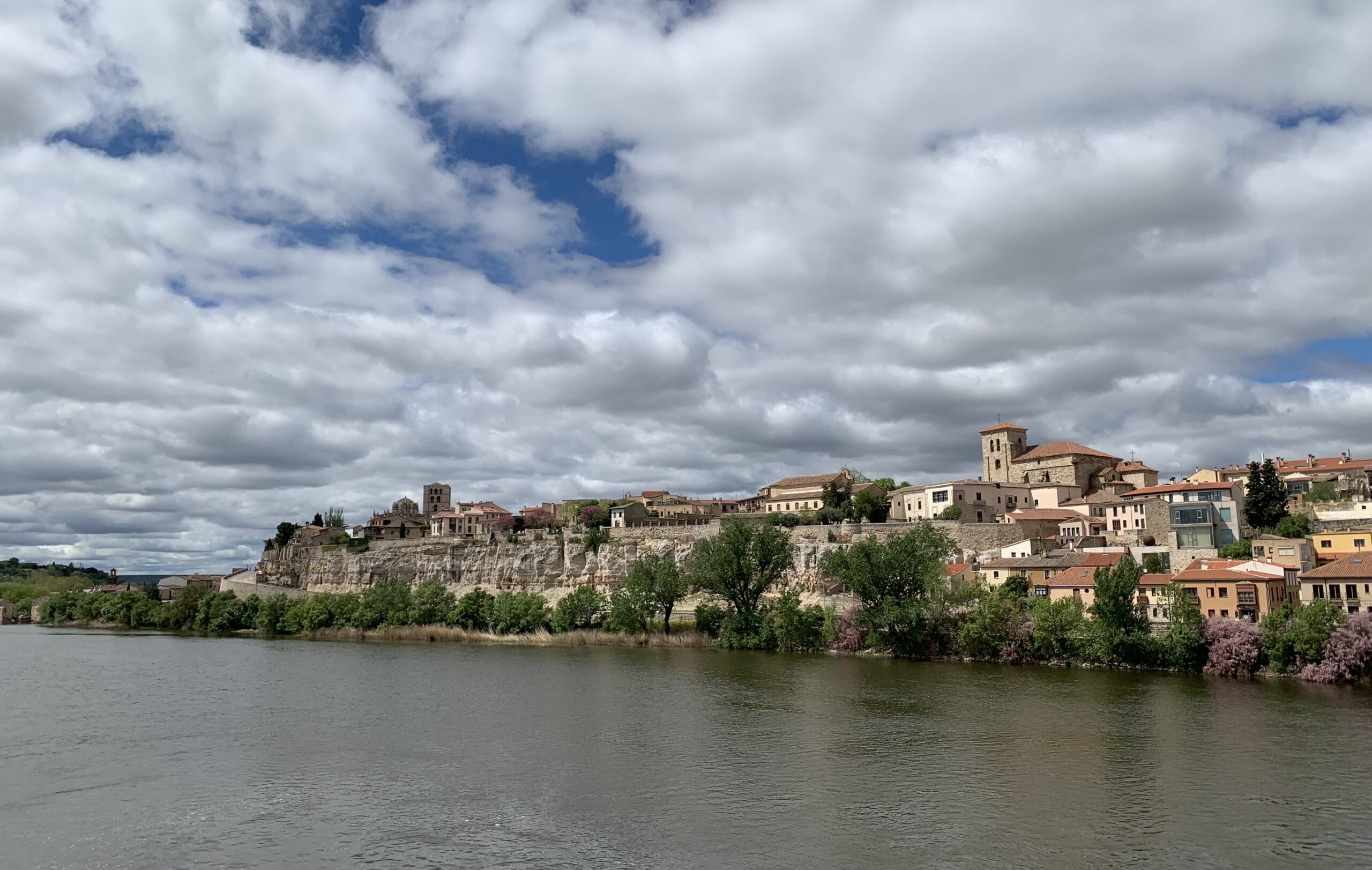
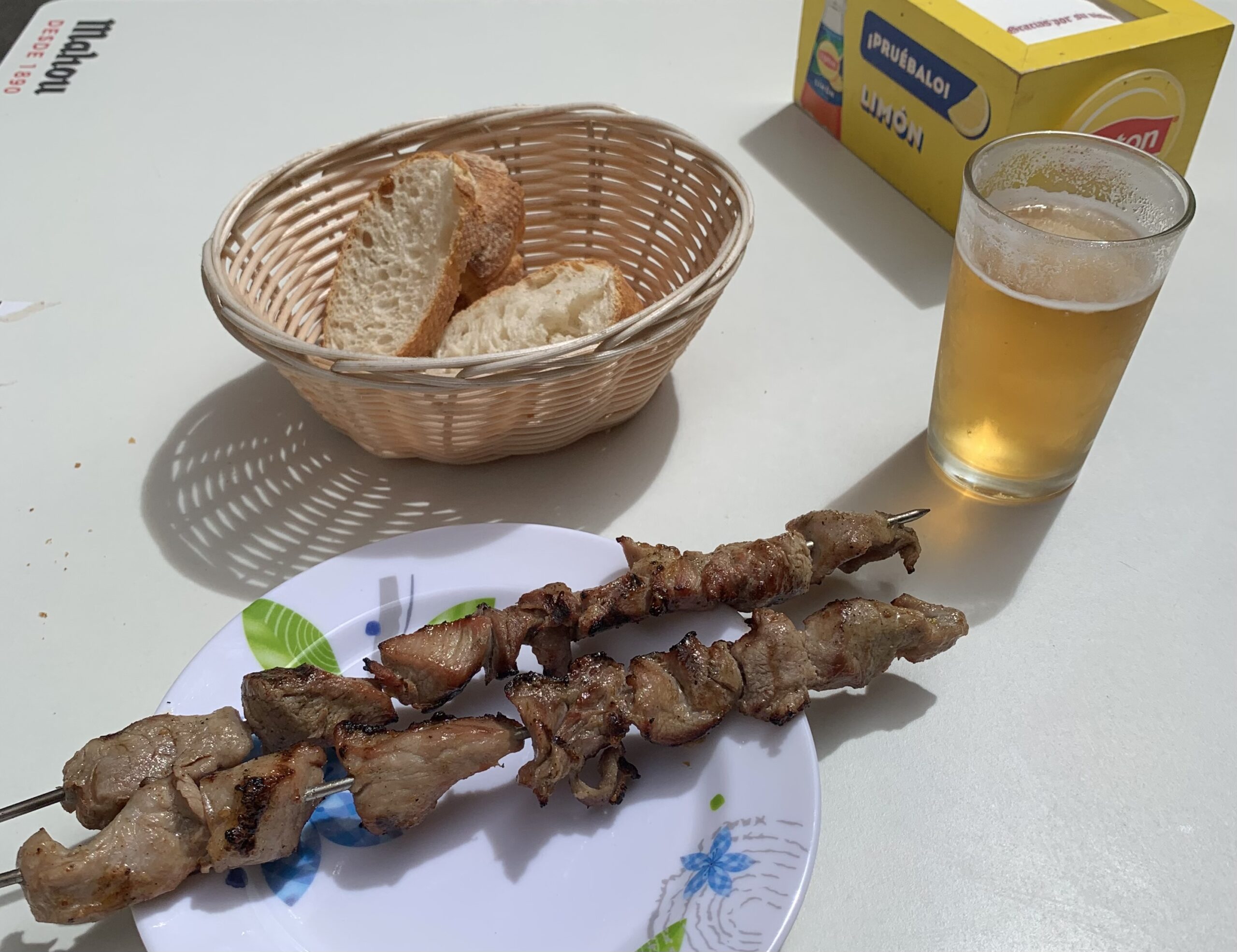
Zamora has been one of the highlights on this trip. One day walking around in the city with Bentley I was stopped by a man asking if I hunt over him. He was a keen upland game hunter and fly fishing enthusiast and we had a good chat. I had to give him the address to this website too. The Castilla y Leon district as well as the bordering Castilla La-Mancha are in my mind the most Spanish of Spain. Landlocked but with the rivers Douro and Tagus running from east to west, the Douro entering the ocean at Porto, the Tagus at Lisbon. Here are wide open spaces with a big blue sky stretched above. Few tourists and interesting, historical cities like Salamanca, Valladolid, Zamora and Leon in the former and Toledo, Albacete, Guadalajara and Ciudad Real in the latter. La Mancha sheep cheese and Don Quixote are quintessential from the area. At present I’m reading Don Quixote and I also got a new tattoo depicting him on his travels. From Zamora I also had a day trip to Toro, known for their excellent wines, slightly heavier than the Rioja wines. Pictured below is a classic lunch of Pinchos Morunos (ie derived from the Moors’ occupation of Spain), skewers of marinated pork (the Moors used lamb) and the Madrid beer Mahou. I sat outside at Bar El Lobo in Zamora with Bentley and had ordered picante (spicy), forgetting that Bentley would be keen on a taste, so I had to get some non-spicy too for the boy. And another Mahou.
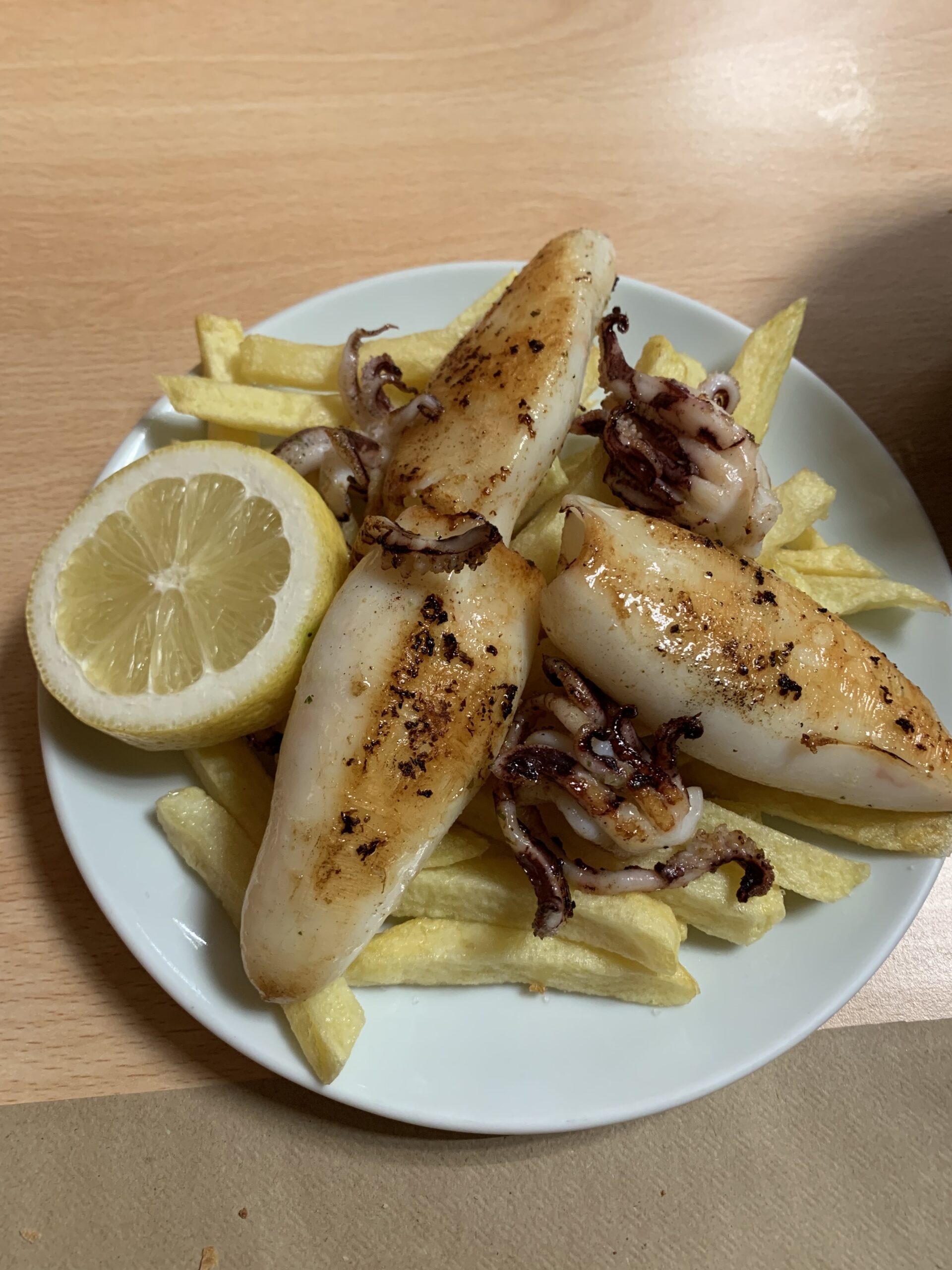
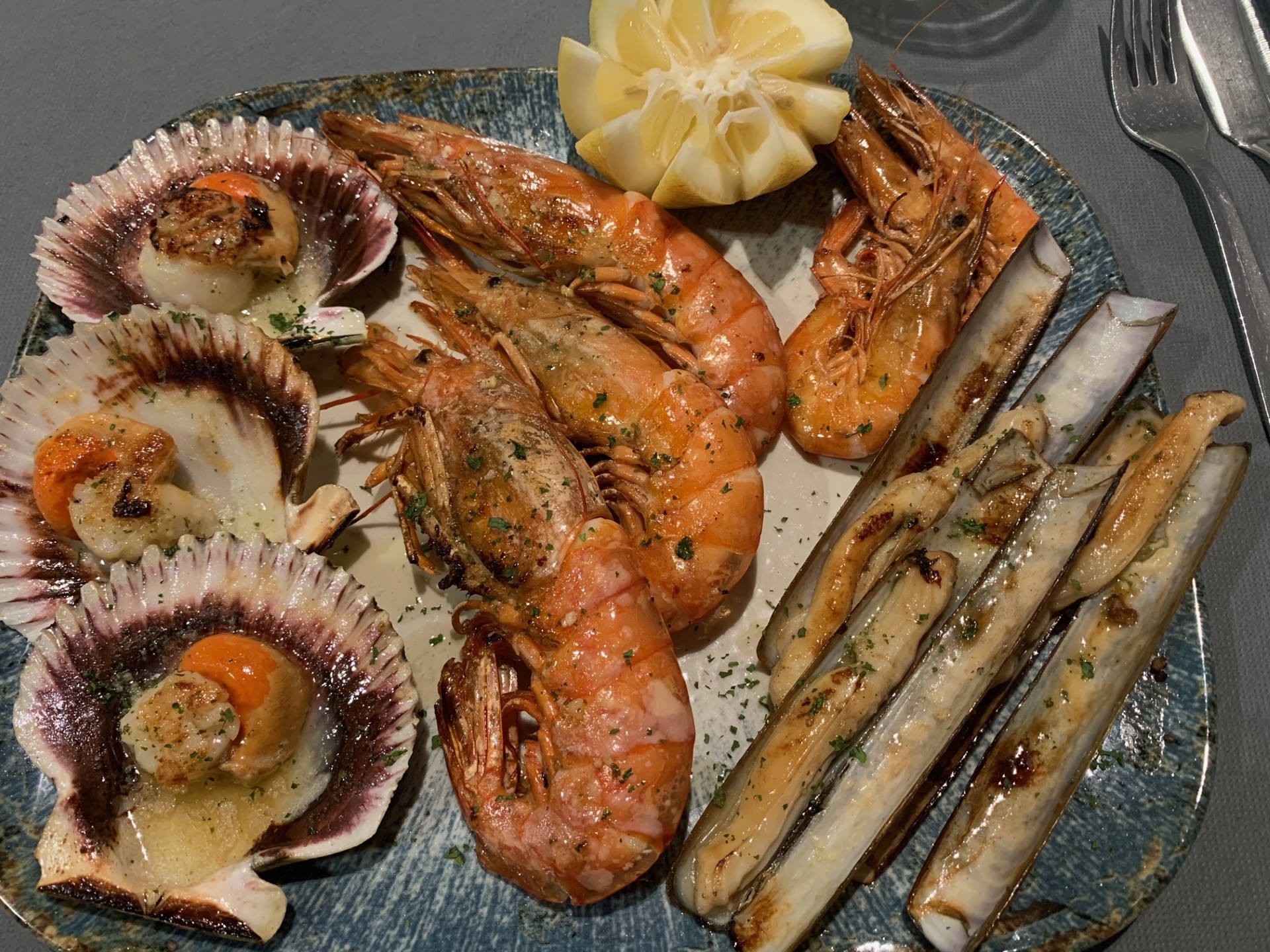
After Zamora it was time to head north to the coast again. To get back in the water for some diving and enjoy more of the Galician seafood. Before I left for Portugal I had finally tried the percebes barnacles, a highly priced delicacy among the locals but I really prefer lots of other things like various fish, octopus, squid, scallops, mussels, prawns, langoustines, cockles, razor clams. Grilled razor clams are yummm! More updates in another month or two!